I grew up in the small town of Wawarsing, NY in the Shawangunk Mountains. Although I was always fascinated by foreign languages, geography, history and basically everything about the larger world, we were a working class blue collar family and never had the opportunity to travel much. To that end, I became interested in shortwave radio listening, as I could hear programming from countries all across the globe, giving me the chance to learn about how other people lived and how other governments presented the news and told their story. I did not have the best equipment at the time, but I spent many hours every evening listening to stations from virtually everywhere. Growing up during the Cold War, in the 1980s, I was especially interested in listening to stations from the “forbidden” parts of the world, about which we knew virtually nothing – like the USSR, Eastern Europe, China, North Korea, Libya, Vietnam, etc… My curiosity never waned and throughout high school I listened avidly every chance I got, and even wrote to these stations in forbidden places to give reception reports in exchange for QSL cards verifying that I had in fact received their station, and with it they often sent lots of other materials, propaganda of various types, and souvenirs from places one could only dream about in the era before internet had been conceived of… I discuss these experiences in detail in my recent Merion+West OpEd, In Defense of TikTok.

That photo is of me in my bedroom with my multiband radio that I listened to shortwave on as a kid – the rug in my hand was one that I made of the Radio Netherlands logo – one of the stations that I listened too often as it had a strong signal and gave what I thought was fairly unbiased news at the time (at least compared to Radio Moscow and Radio Pyongyang.
Over the years, I began to get the chance to travel internationally, which gradually replaced shortwave radio listening as a primary means to satisfy my wanderlust – when our high school jazz ensemble played at the Montreux Jazz Festival in 1982, it was my first chance to travel to Europe and use the French I studied in school for the first time other than a couple road trips to Quebec when I was young (like to the 1976 Olympics, for example)

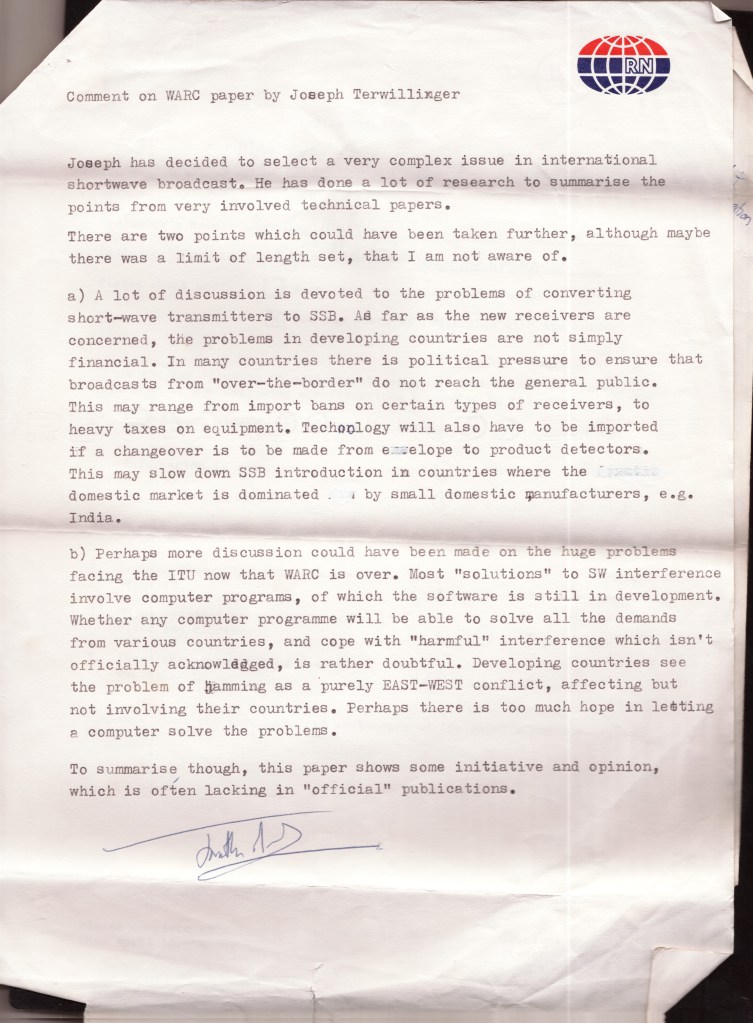
When I went to undergrad at the Peabody Conservatory of Music, I gradually lost interest in shortwave radio, mostly because I had terrible reception in the dormitory in central Baltimore – much different that being in the mountains in upstate New York… But I did write my term paper my freshman year on the World Administrative Radio Conference on High Frequency Radio Broadcasting in 1984, debating the future of shortwave broadcasting under the optimistic view that bands were becoming overcrowded… Of course today they are almost empty as internet put most of the shortwave broadcasters out of business, even Voice of America as of March 2025.
That term paper is linked here (didn’t get a great grade, but I think I did pretty good for a tuba major…).

Shortwave Radio programming gradually waned in importance with the rise of the internet, so I gradually lost interestctual travel. But when the Covid pandemic hit in 2020, I found myself alone in a NYC apartment with nothing social to occupy myself, so I spent my evenings studying for my ham radio license – living in a NYC apartment may not be ideal for such endeavors, but I have a 24th floor river view, so it actually isn’t nearly as bad as I expected, and with the world in crisis, it seemed like a useful skill to have, and a way to reconnect with my favorite pastime as a kid. We couldn’t afford a transmitter back then, so I was just a passive listener, but I became quite good at designing homemade antennas and the like, so it seemed like the right time to go for it. After a month or so of studying I got my Amateur Extra license, giving me full access to the entire spectrum of broadcasting bands. I bought a couple nice transceivers (ICOM !C-7300, IC-905, and Yaesu FT-70D) to go with my various shortwave receivers and scanners, and it helped keep me sane during the lockdown.

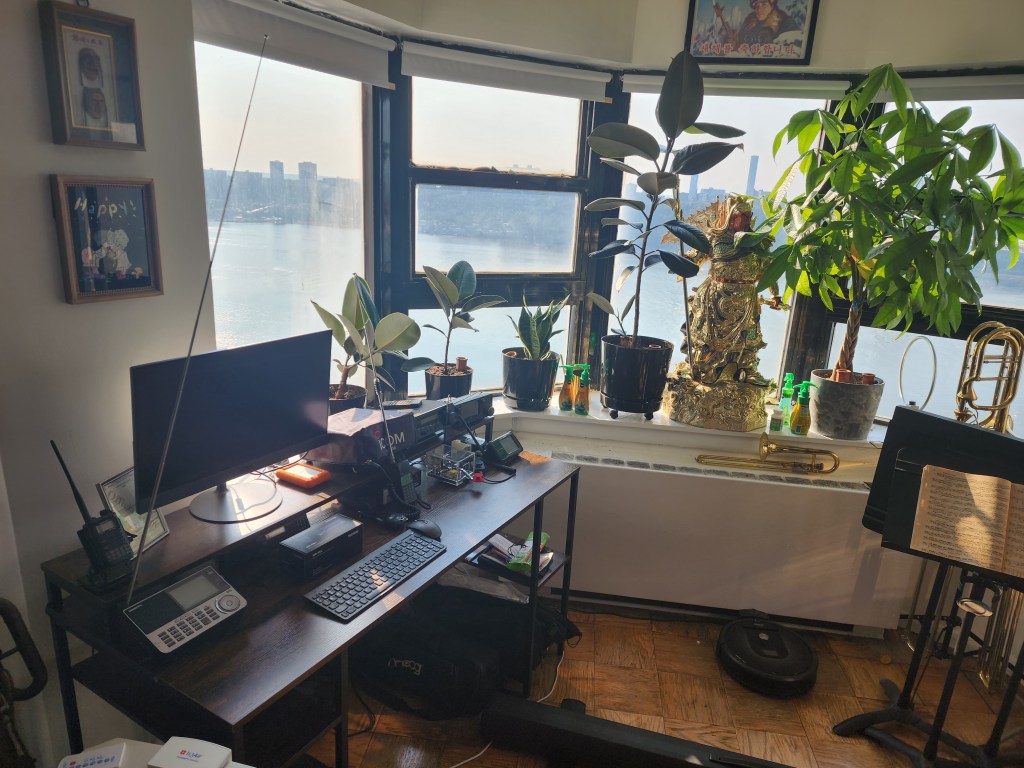
Those plants sure grew a lot in the subsequent two years!

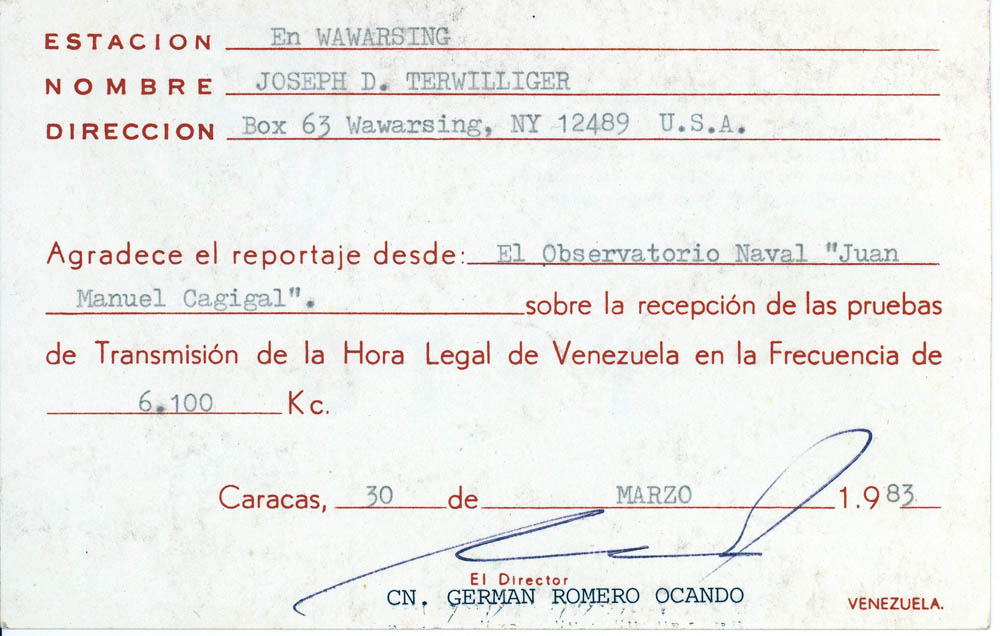
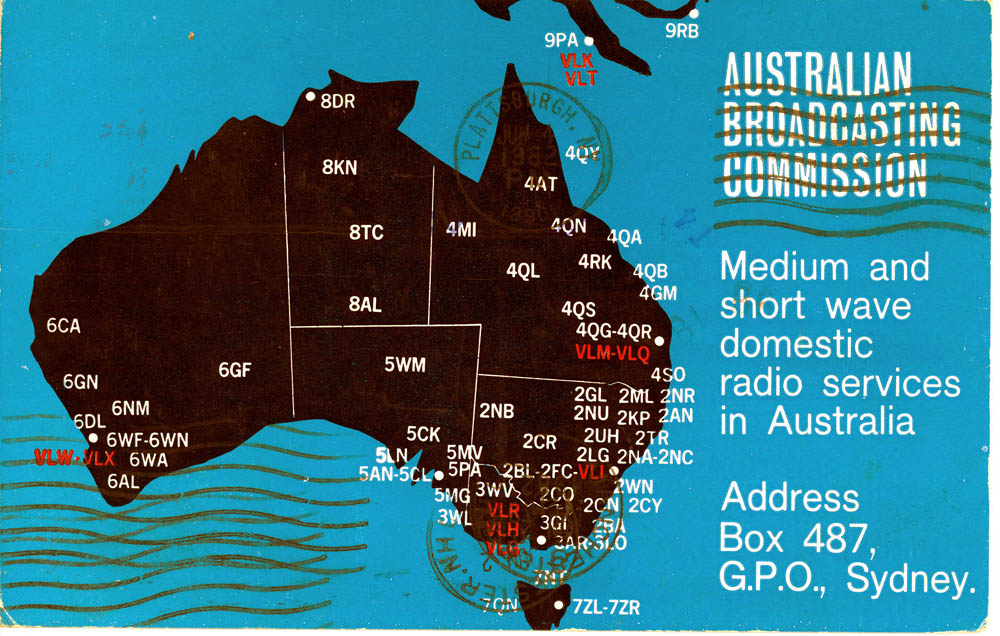
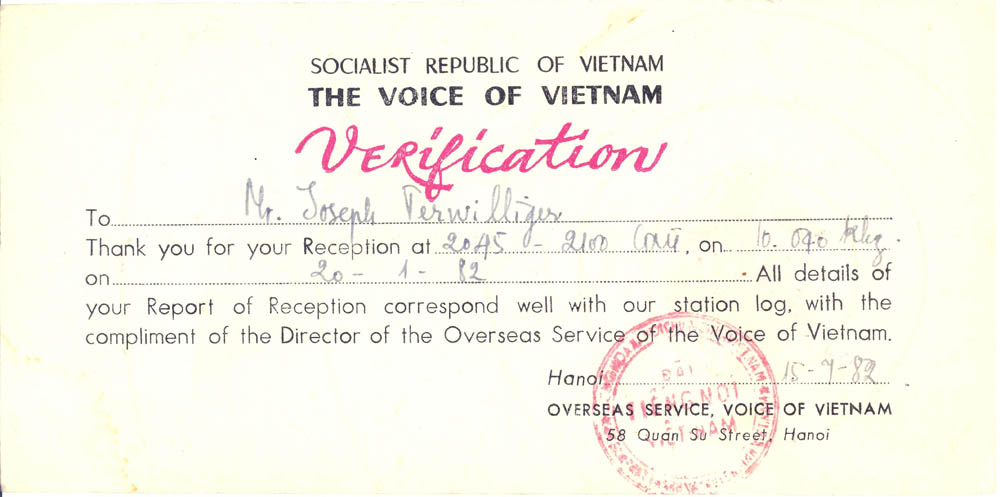
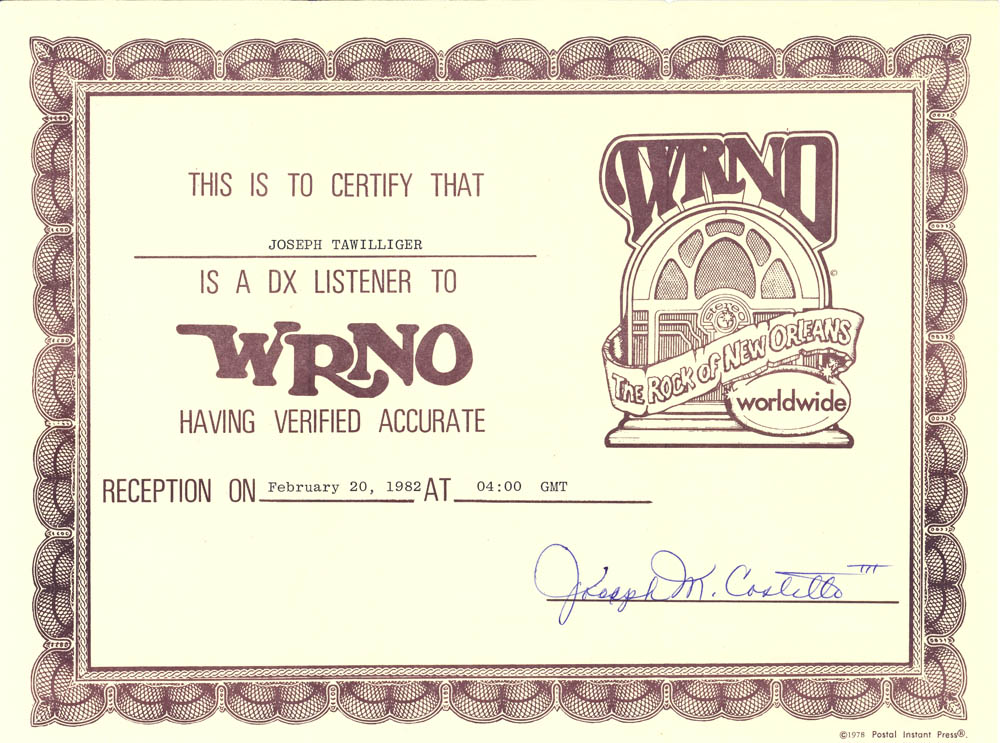
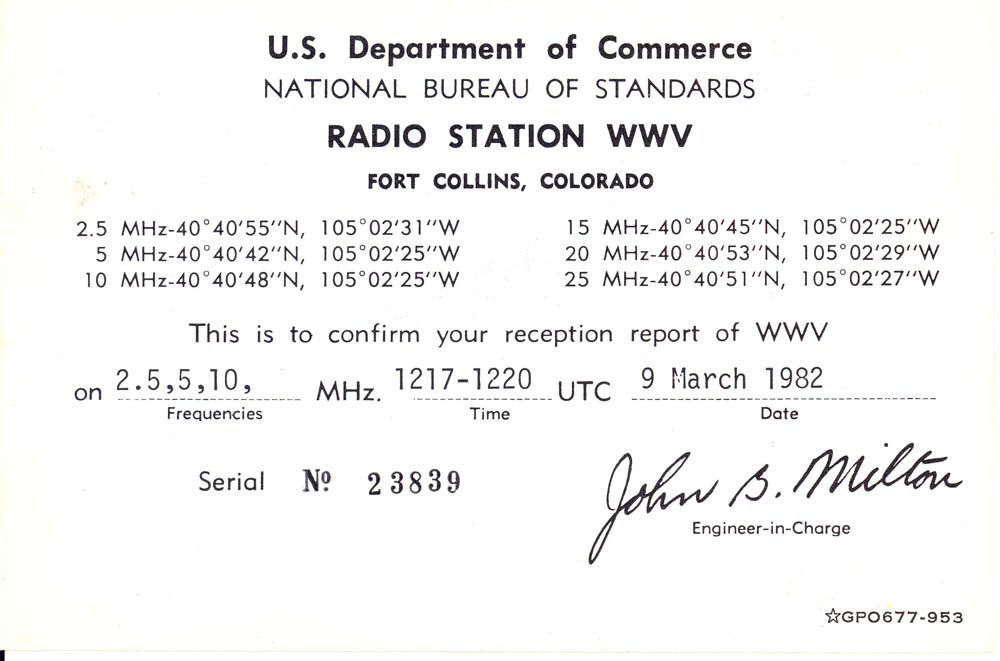
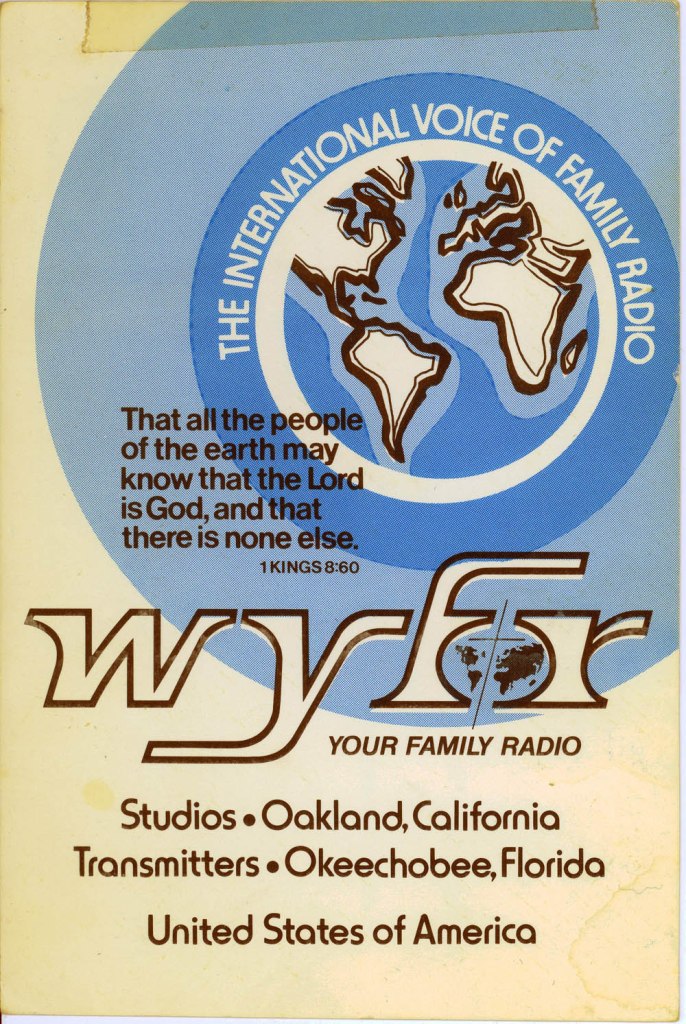
My father, who fought in World War II, was often shocked and scared when I would get envelopes in the mail from the USSR and other such places – having lived through the McCarthy era, but nevertheless, I managed to amass a lot of QSL cards verifying my reception of different international broadcast stations. I show them below, both for historical reference, as well as general interest and curiosity about the old days of SWL. Images from this set of QSL cards were used in an article in Popular Communications about the Voice of Vietnam in January 2010 (page 23)

QSL CARDS FROM 1980s
Australian Broadcasting Commission

All India Radio


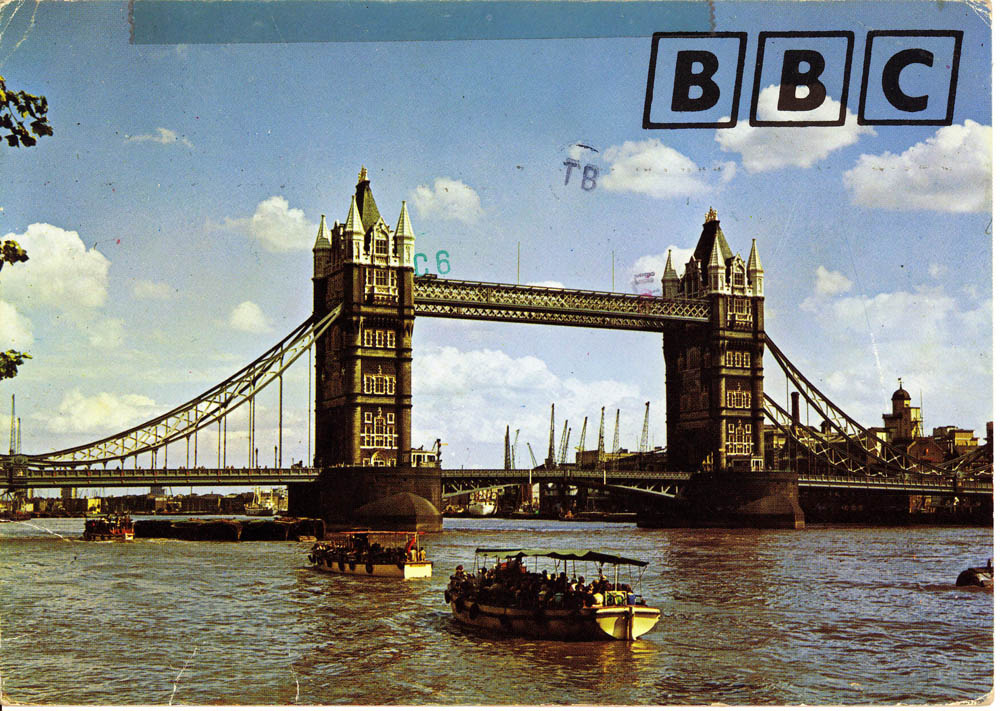
British Broadcasting Corporation

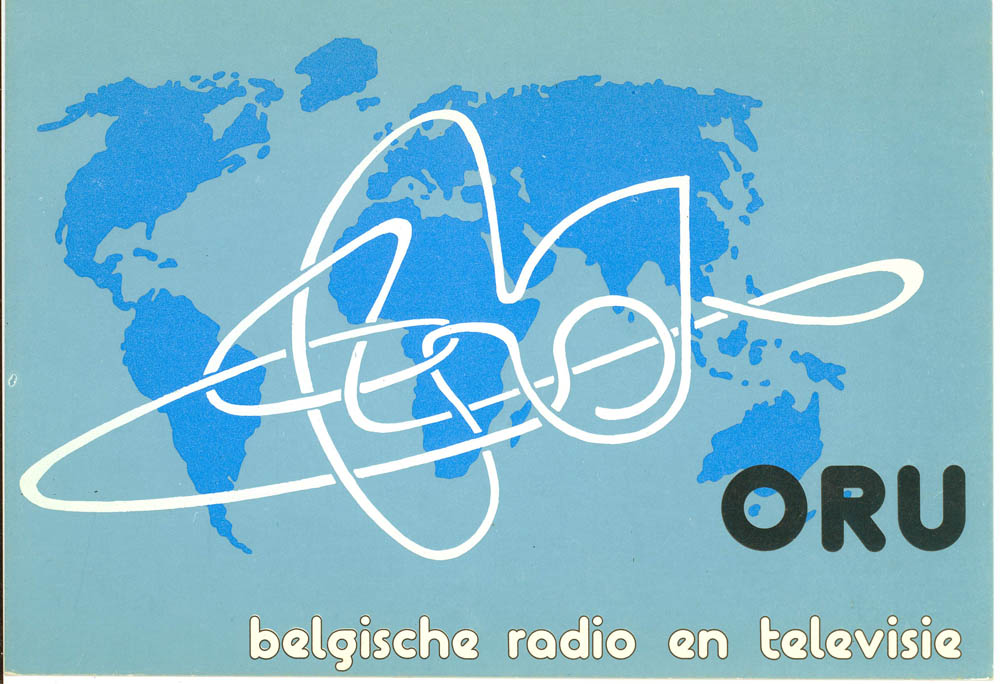
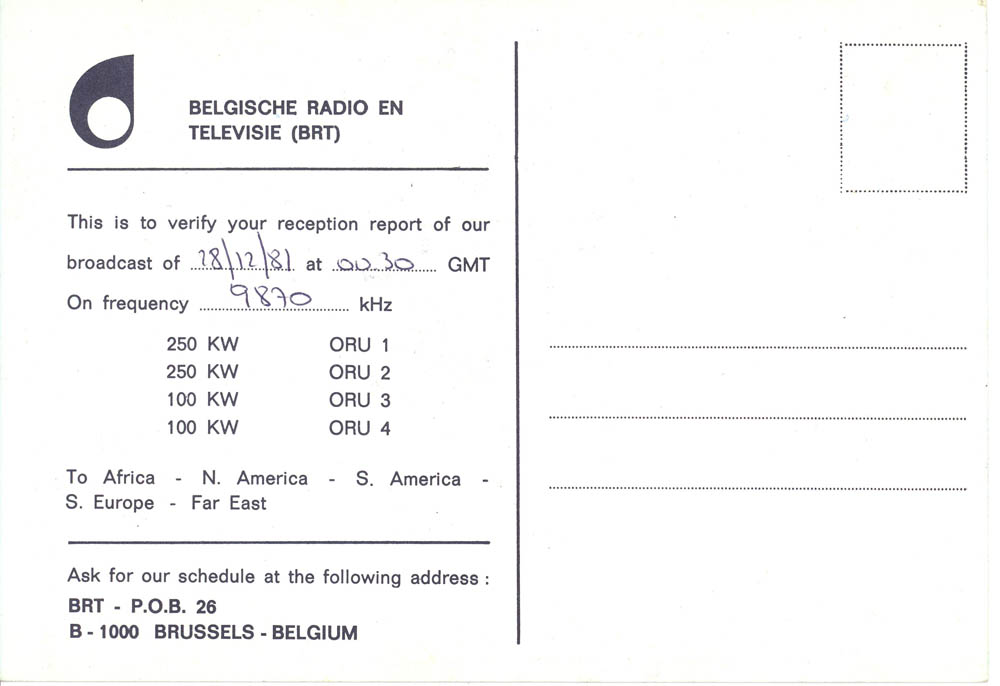
Belgian Radio and Television
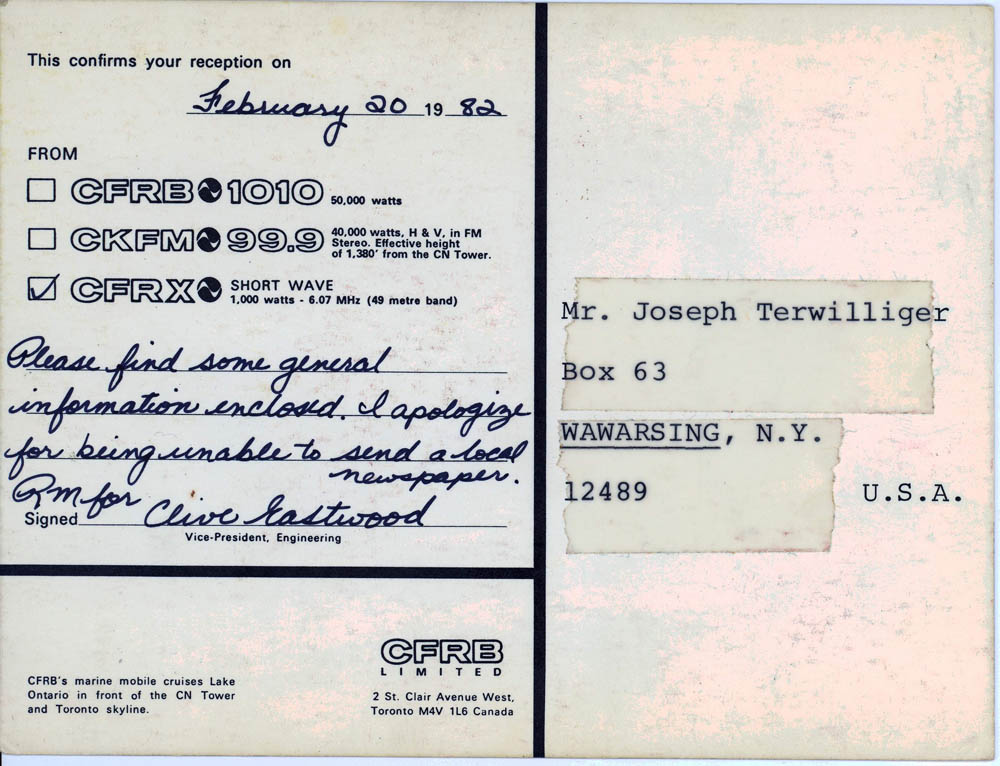
CFRX – Toronto, Canada

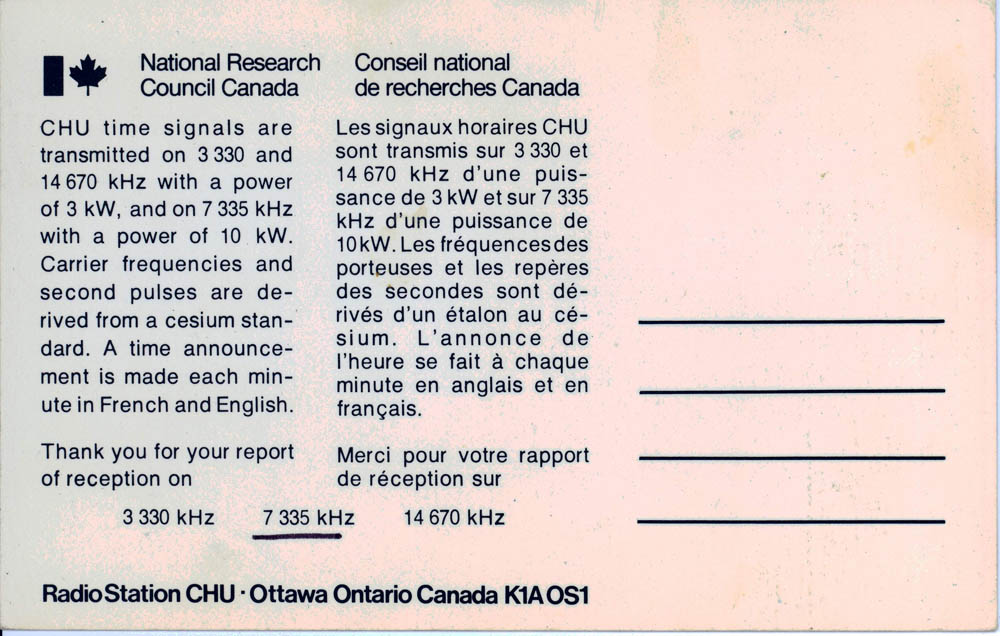
CHU Time Signal – Canada

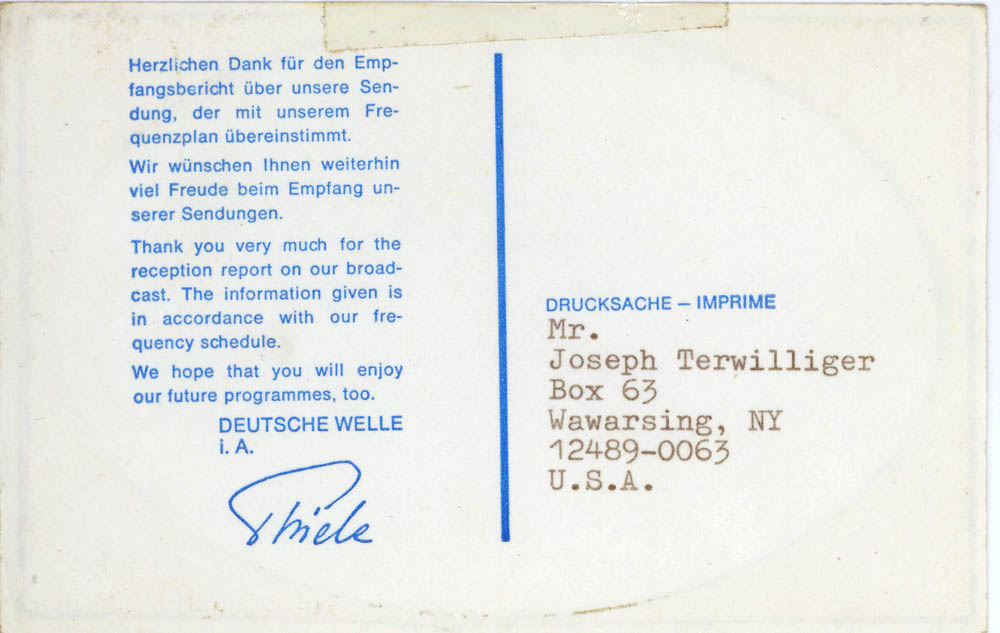
Deutsche Welle (West Germany)

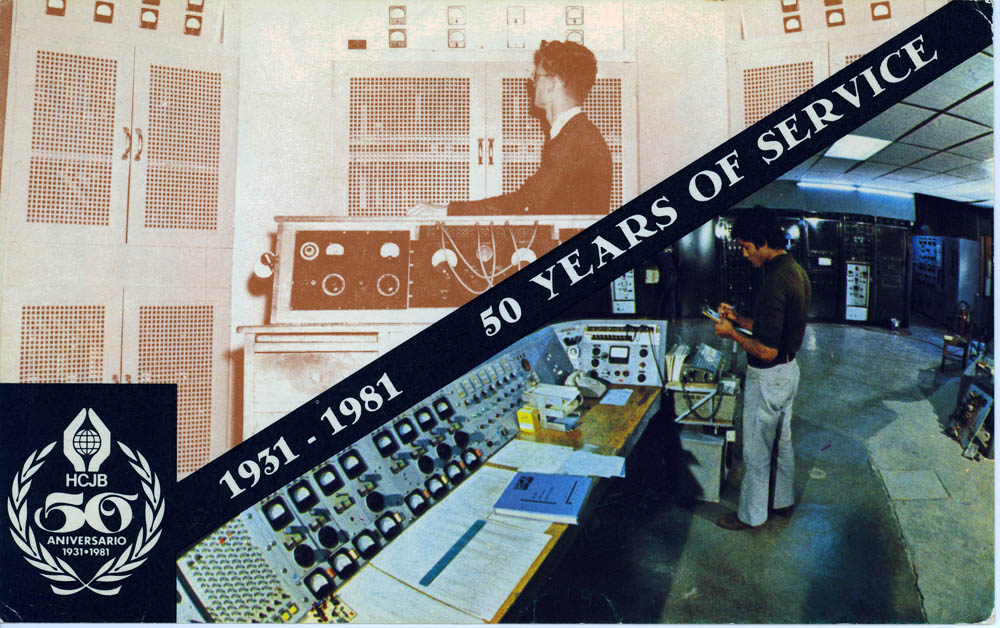
HCJB – Ecuador

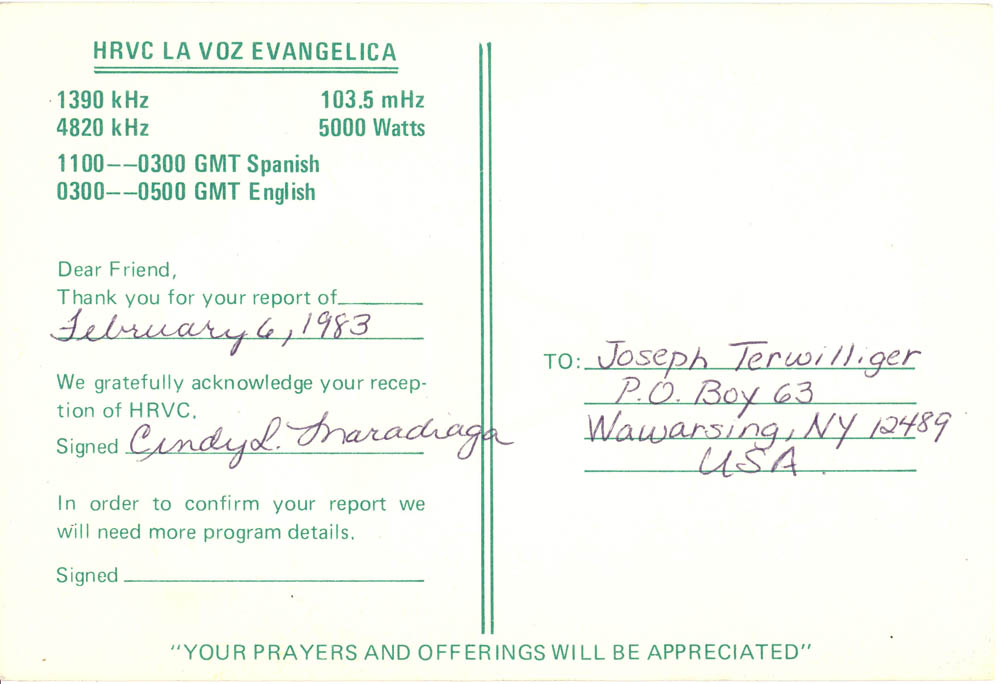
HRVC – Honduras

Kol Israel
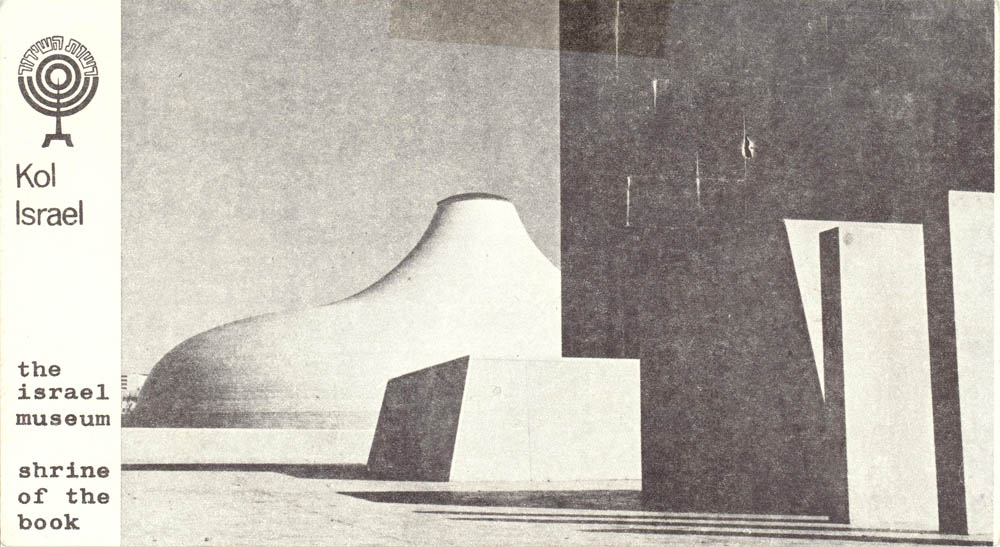


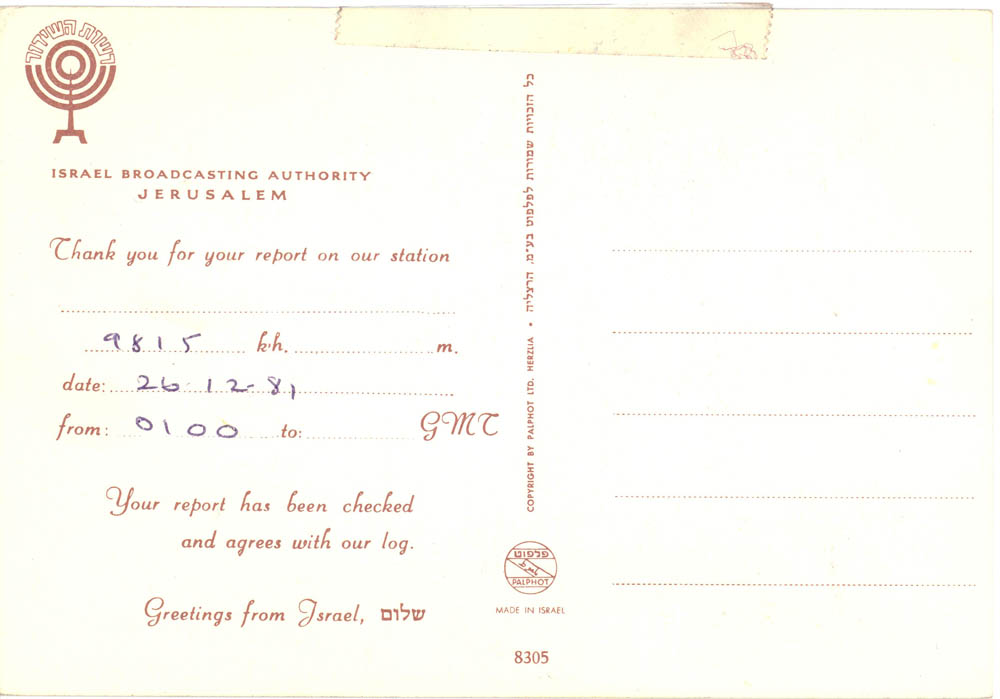
NRK Radio – Norway


ORF – Austria


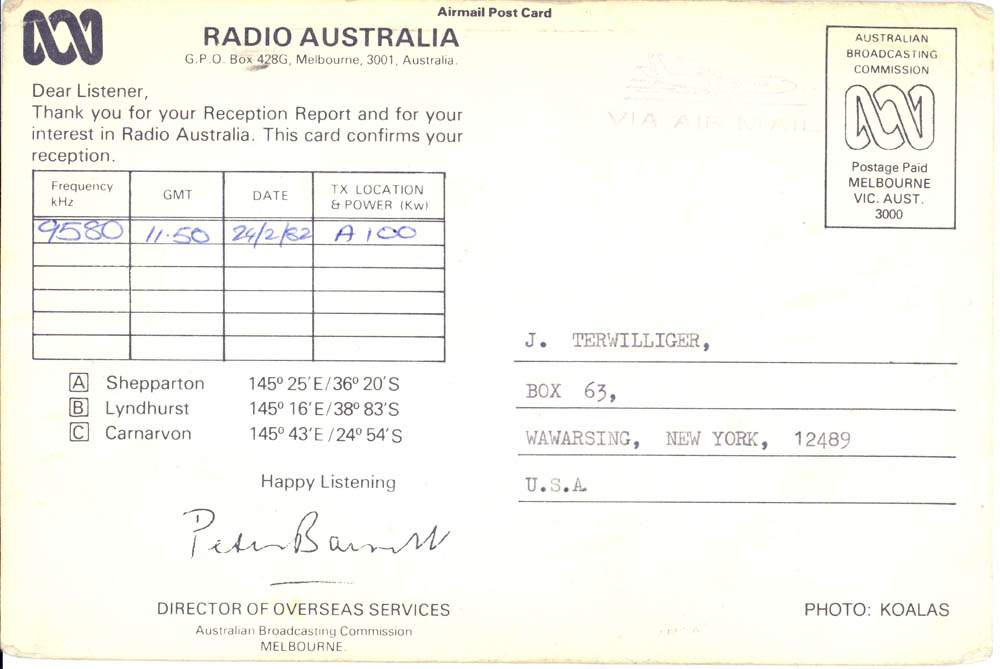
Radio Australia
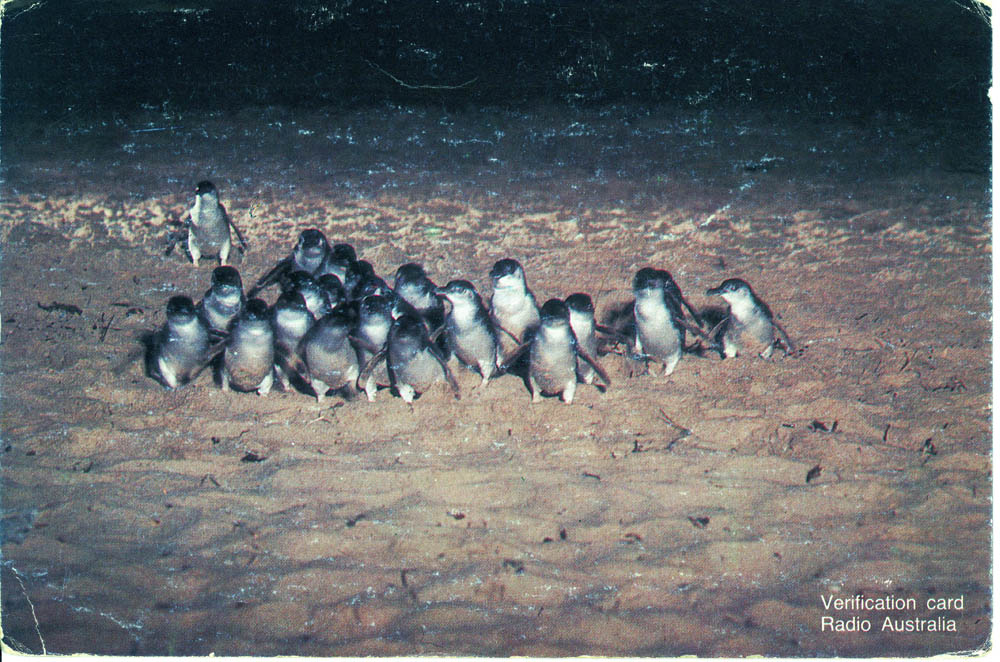
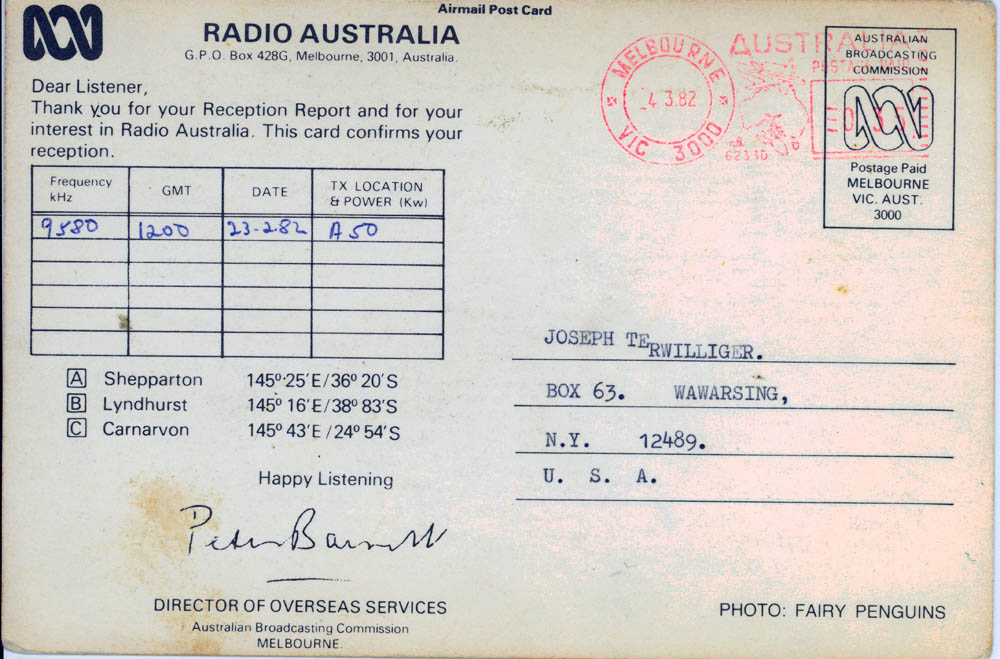

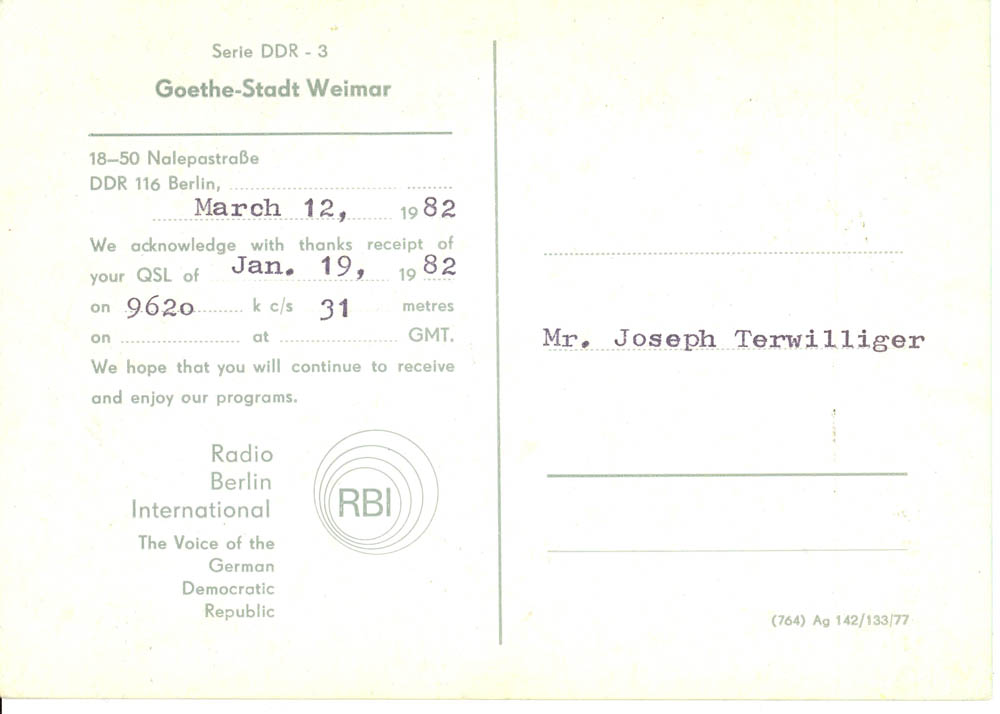
Radio Berlin International (East Germany)

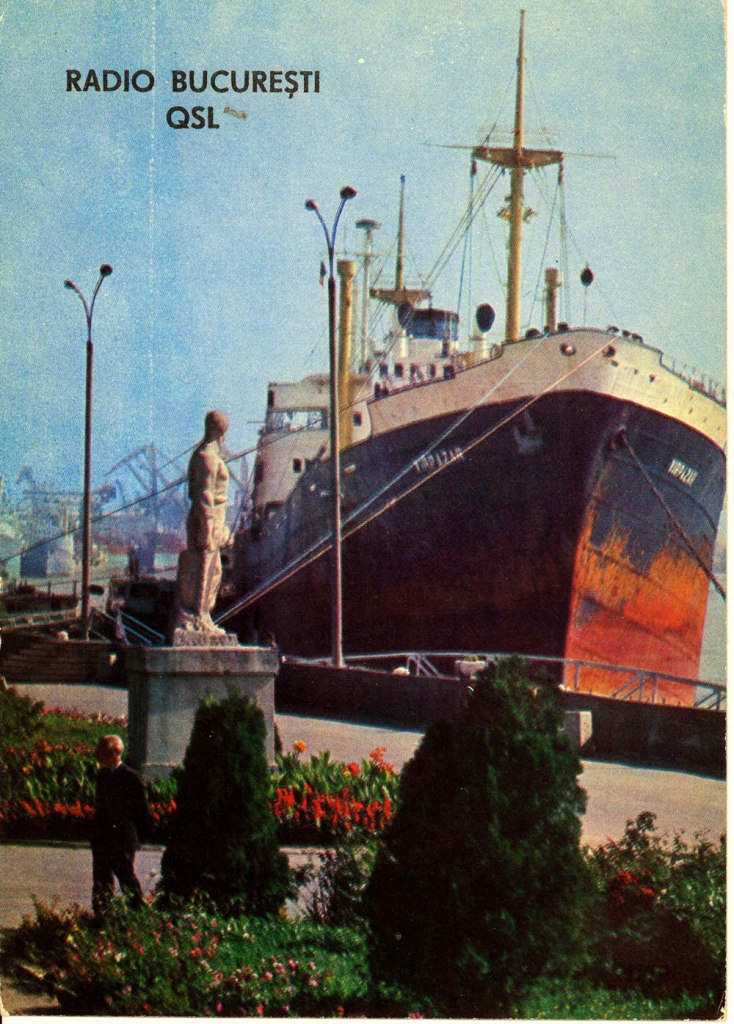
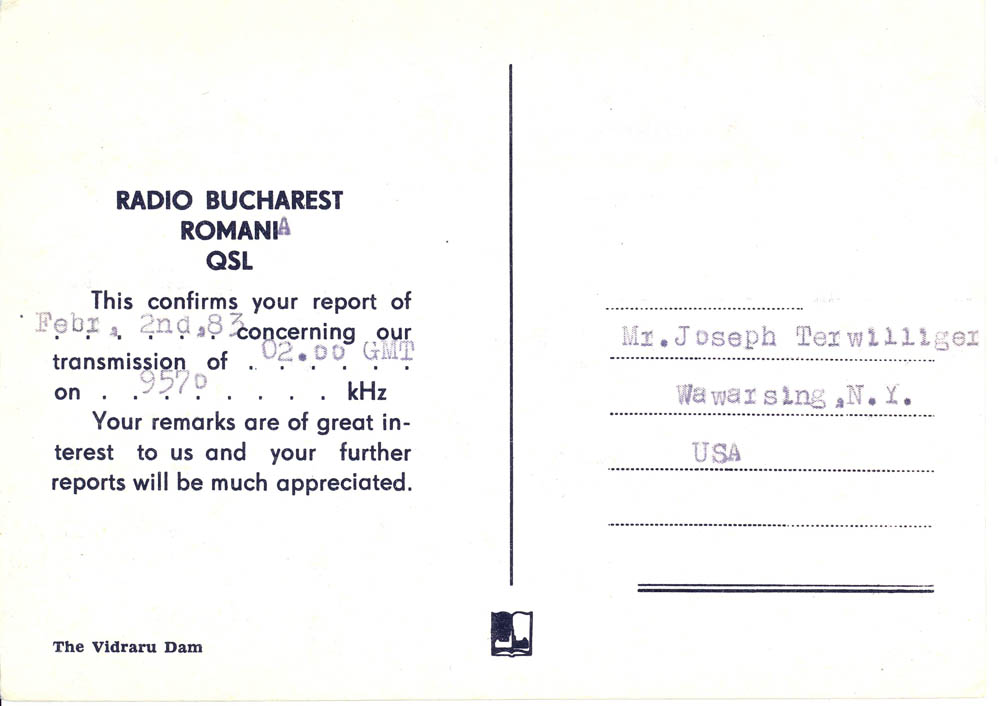
Radio Bucuresti – Romania


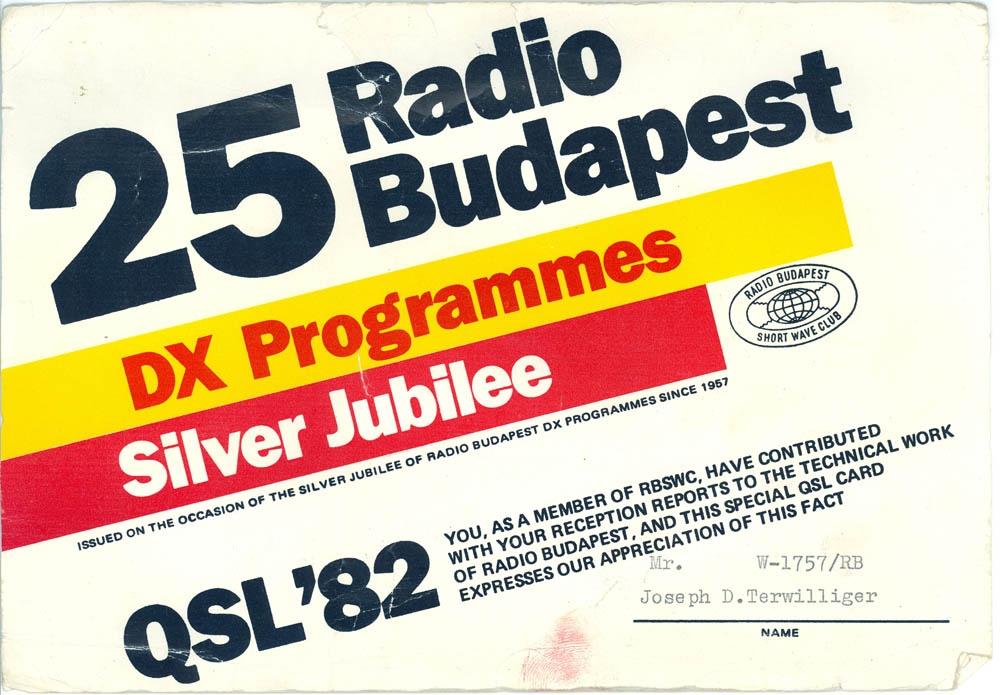
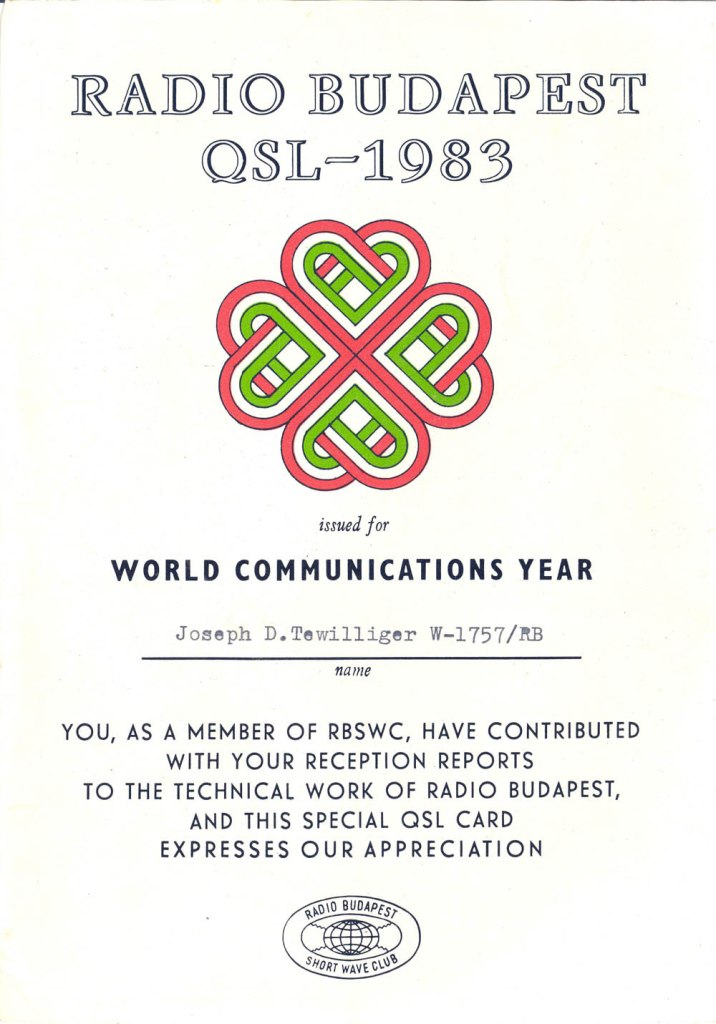
Radio Budapest – Hungary


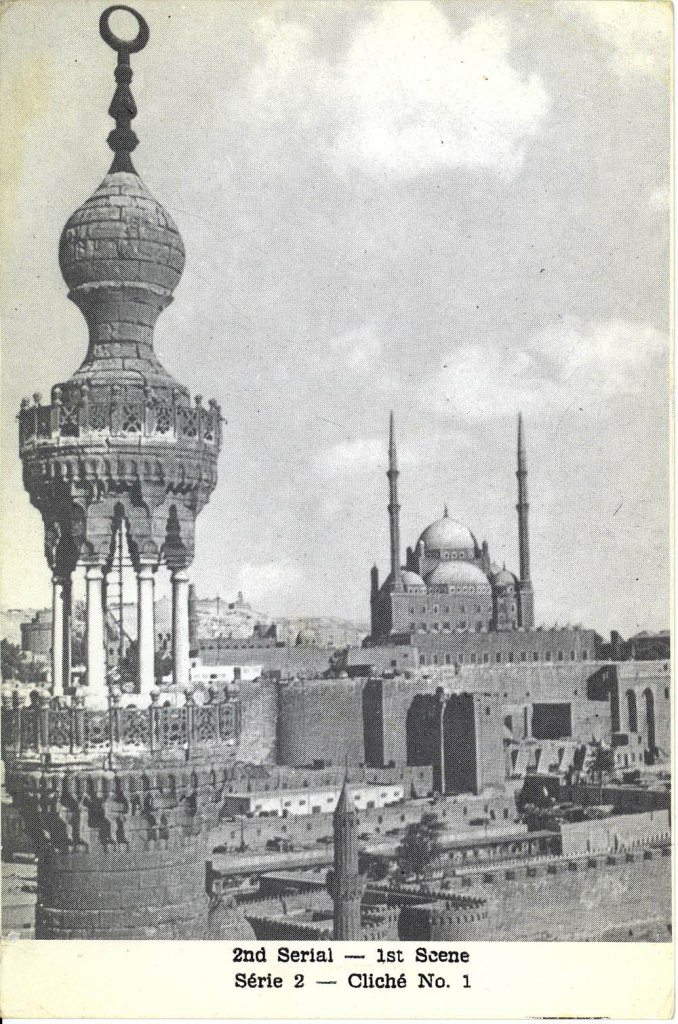
Radio Cairo – Egypt

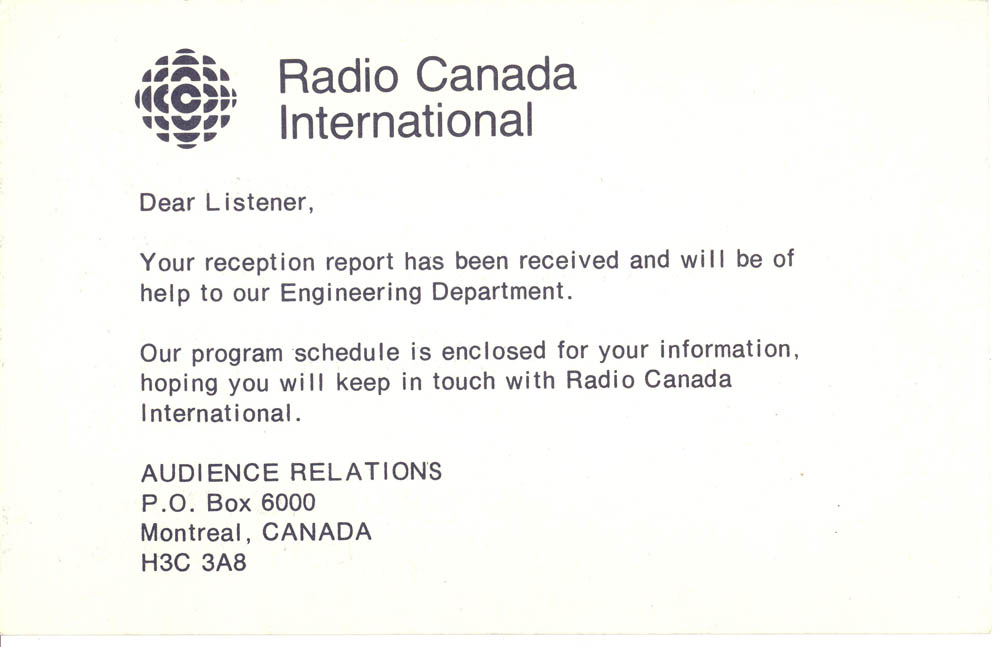
Radio Canada International

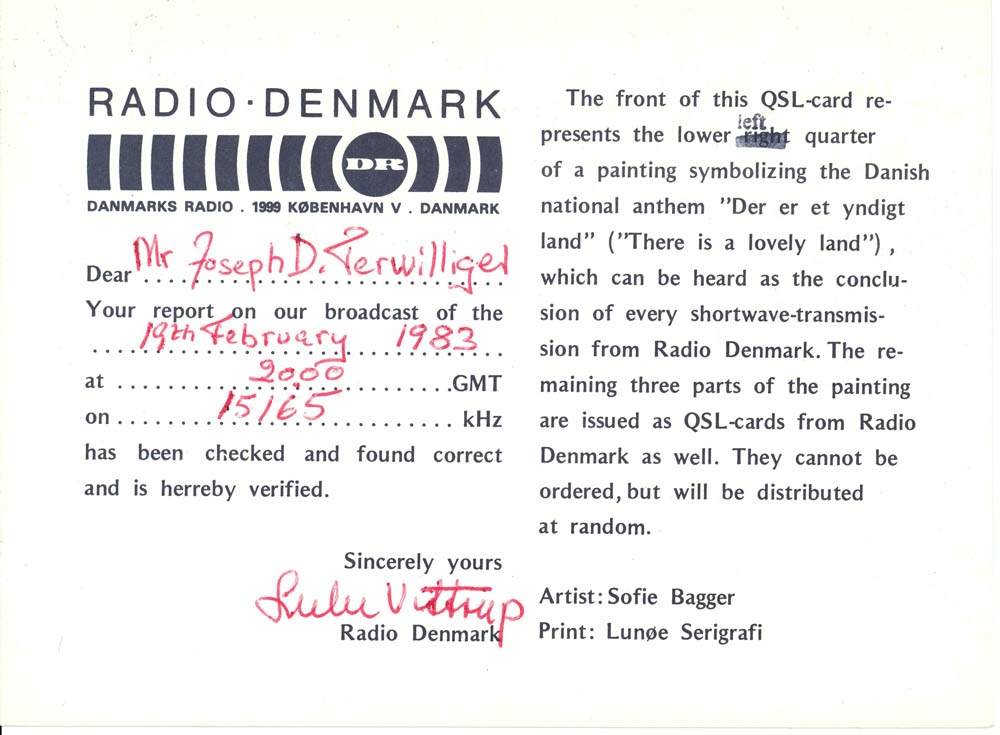
Radio Denmark

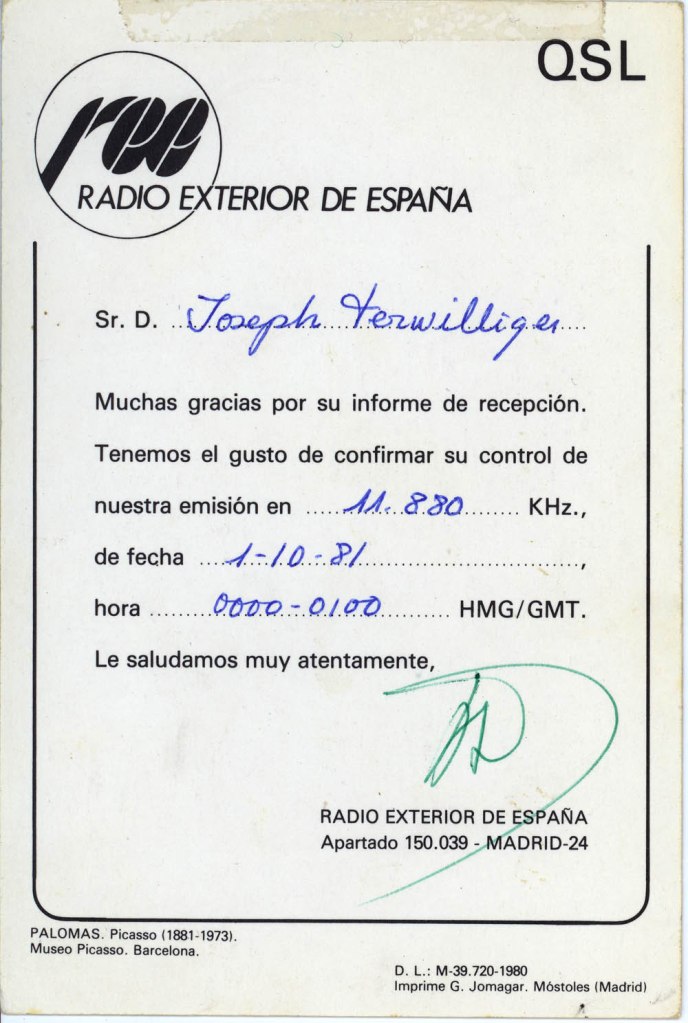
Radio Exterior de Espana – Spain





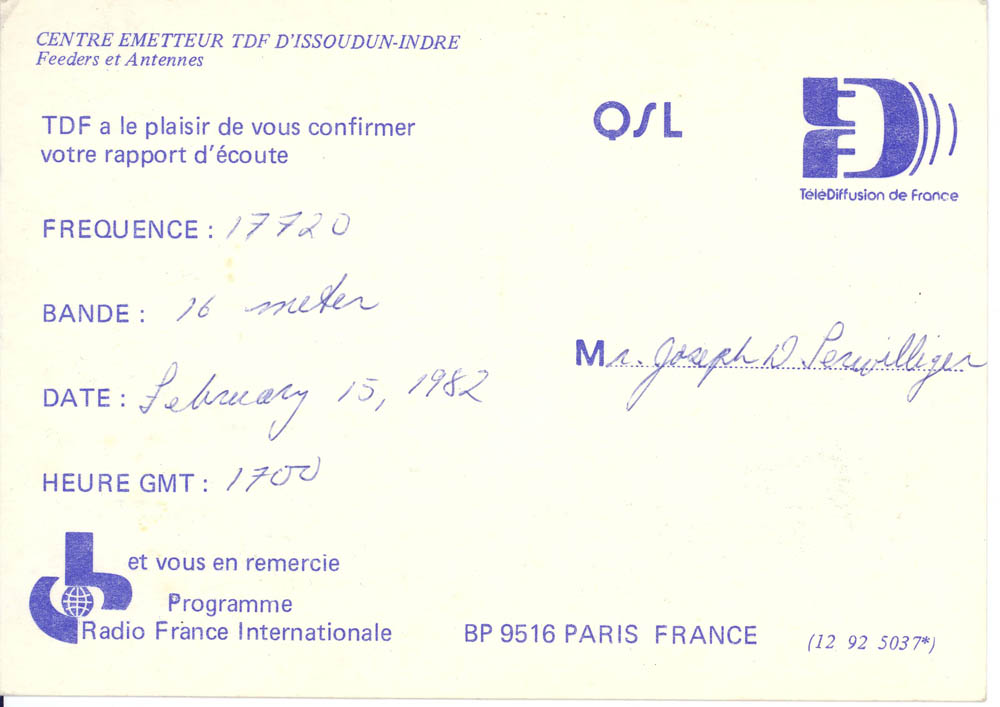
Radio France International


Radio Free Europe


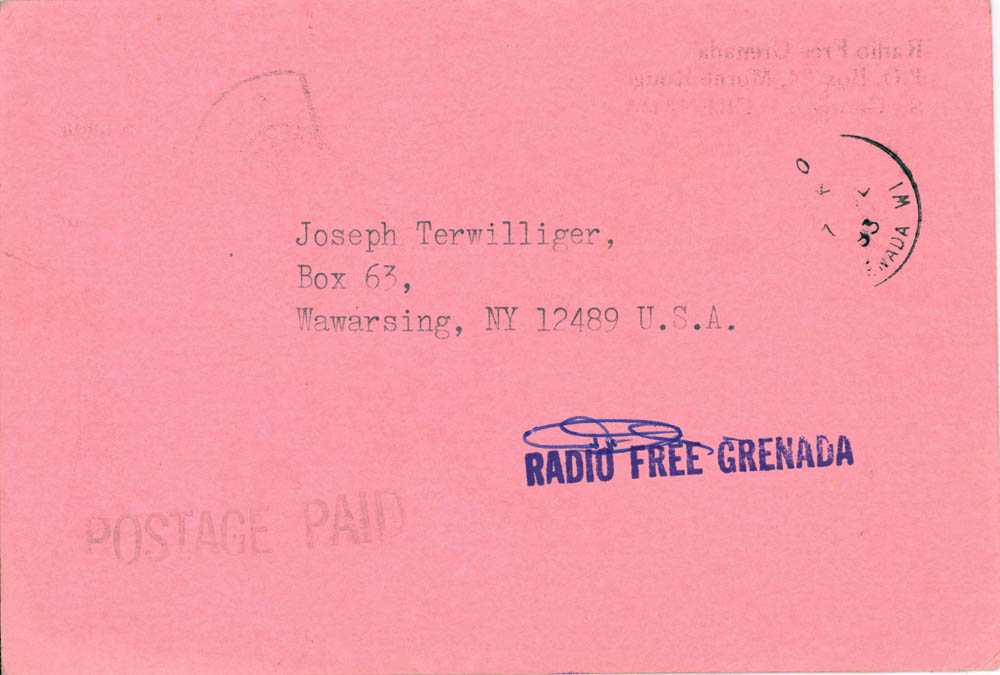
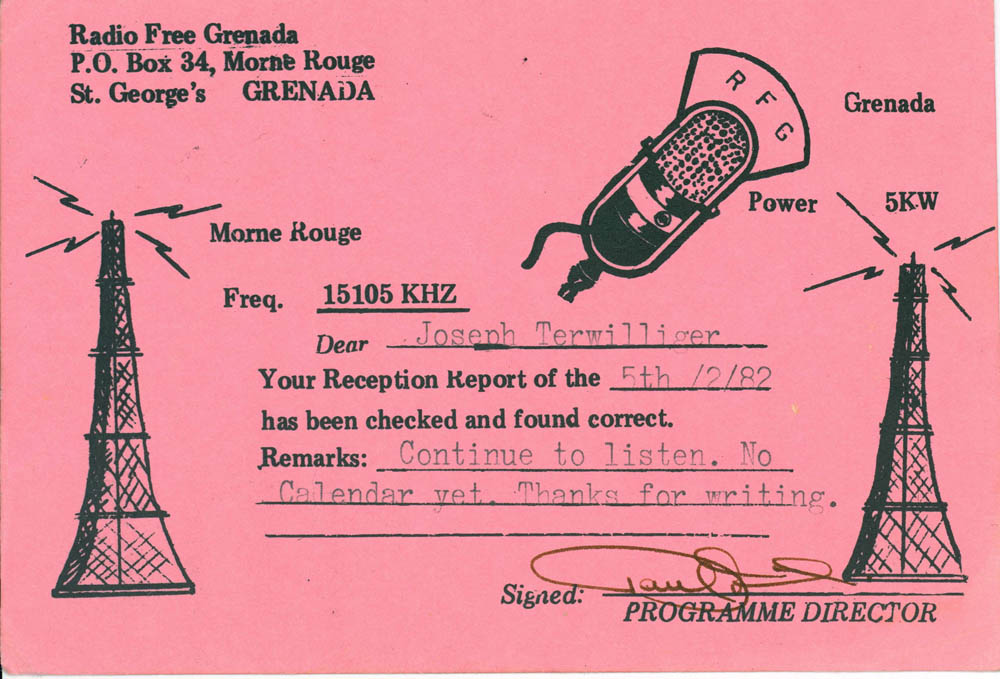
Radio Free Grenada
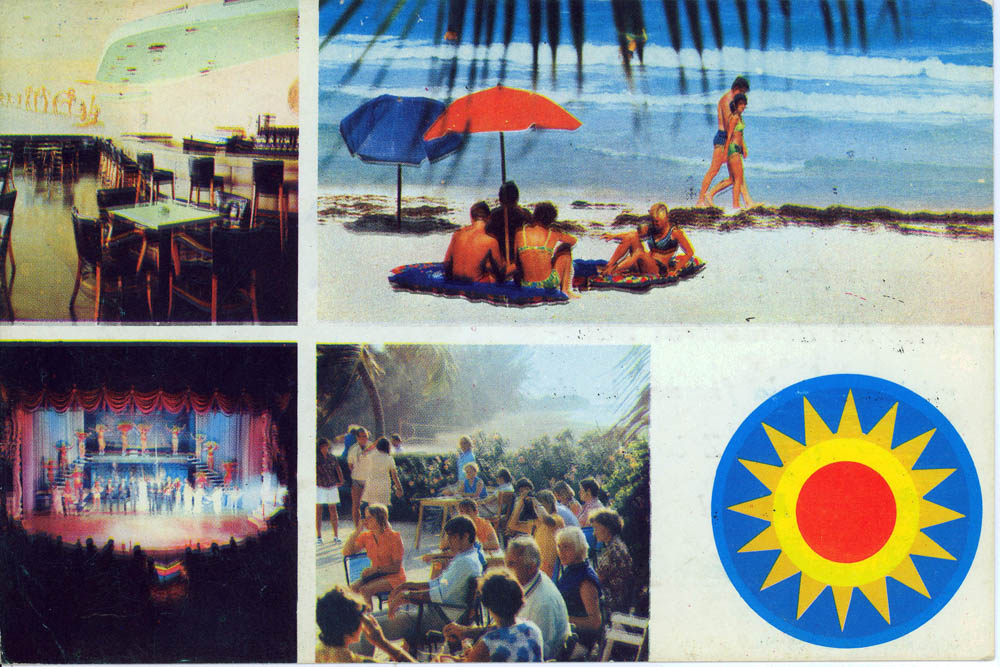
Radio Habana – Cuba

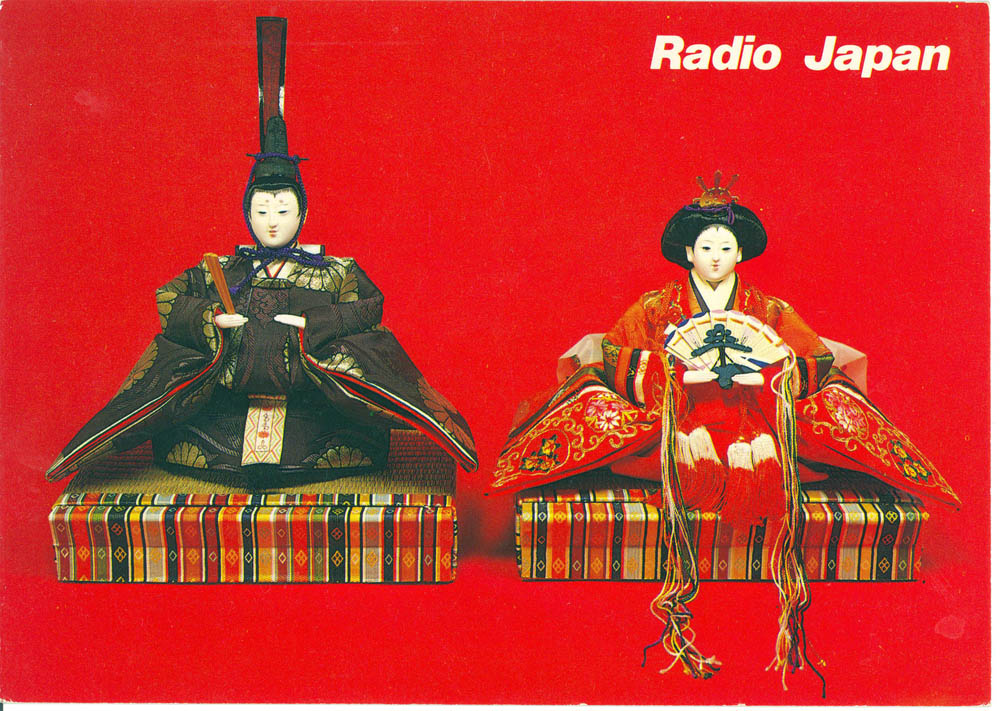
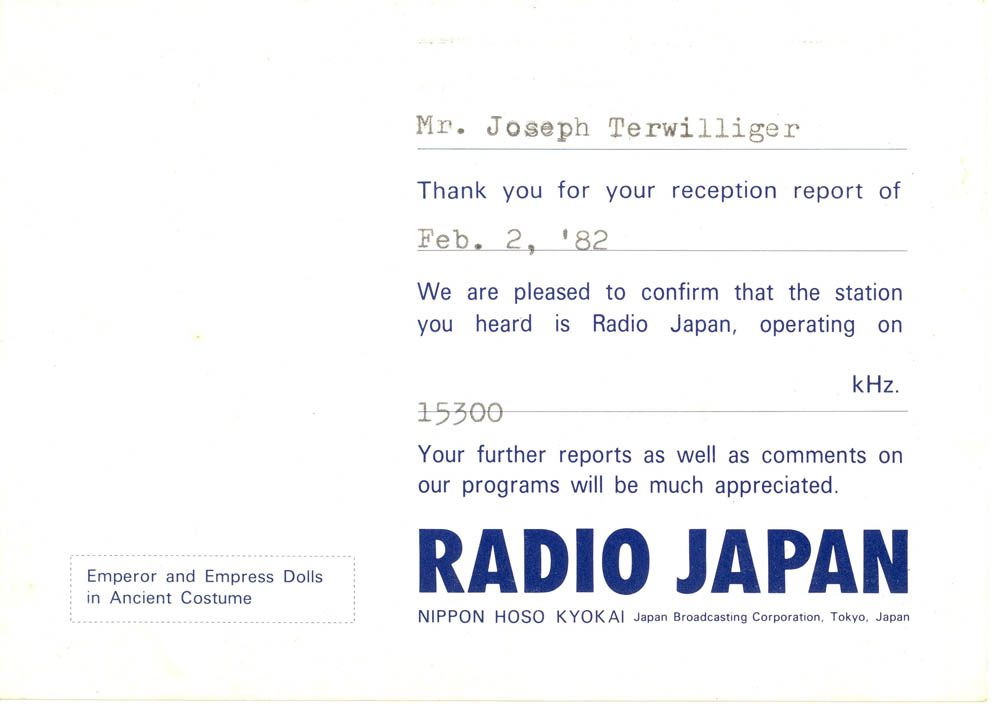
Radio Japan


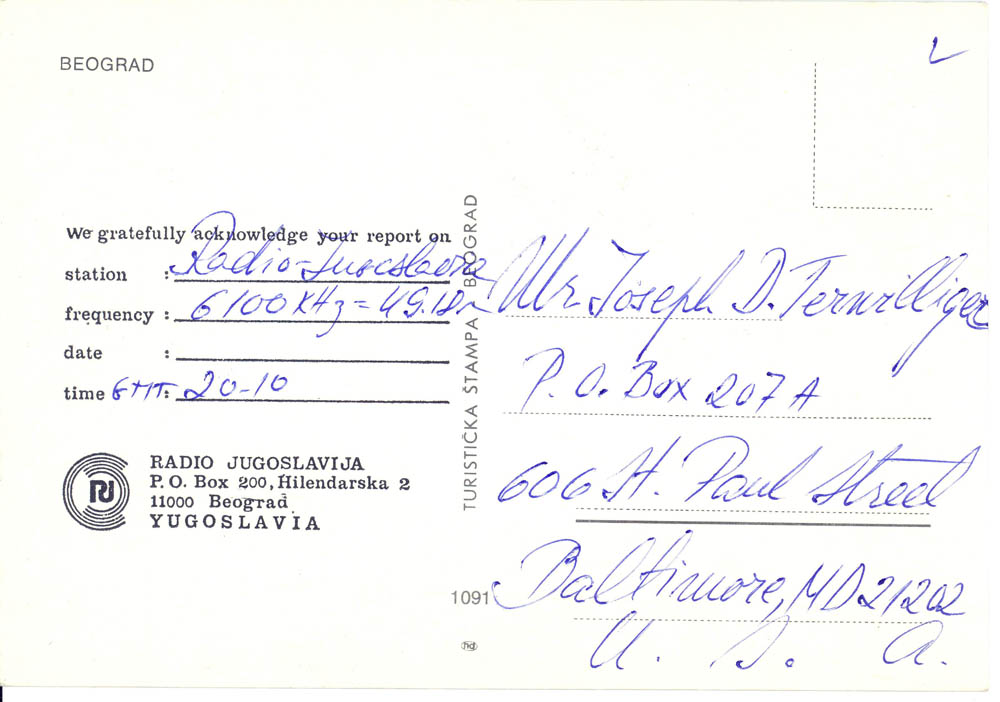
Radio Jugoslavija – Yugoslavia

Radio Kiev – Ukrainian SSR


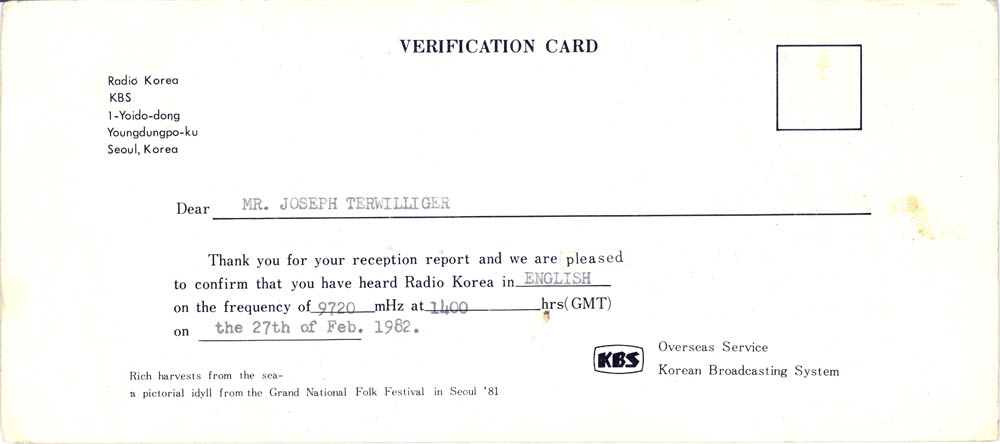
Radio Korea (South Korea)

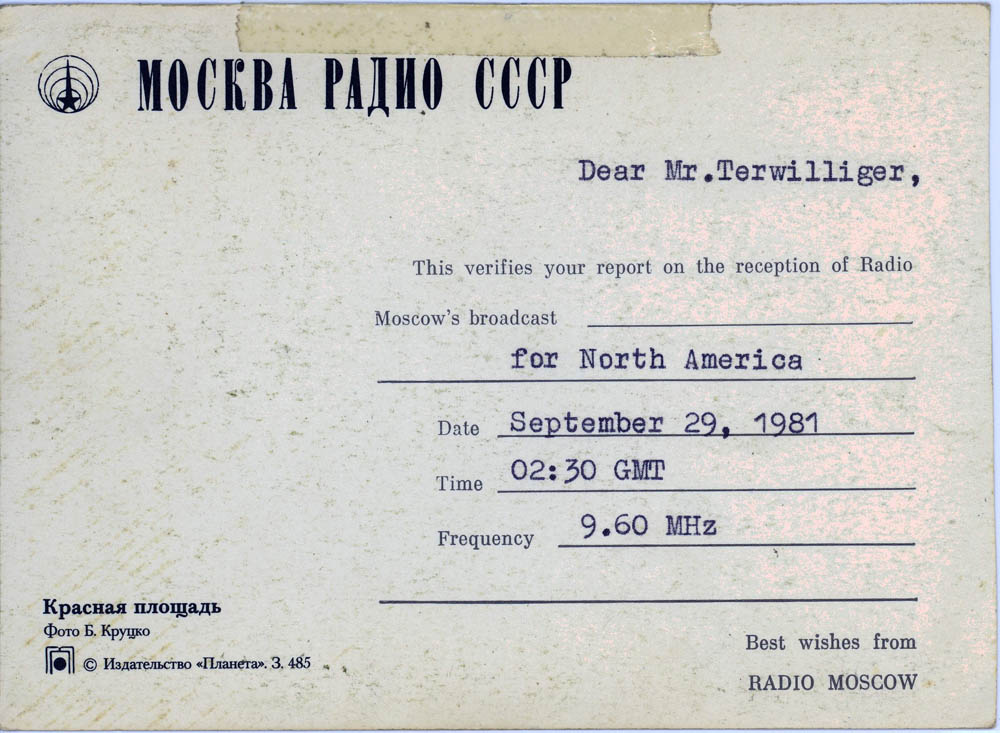
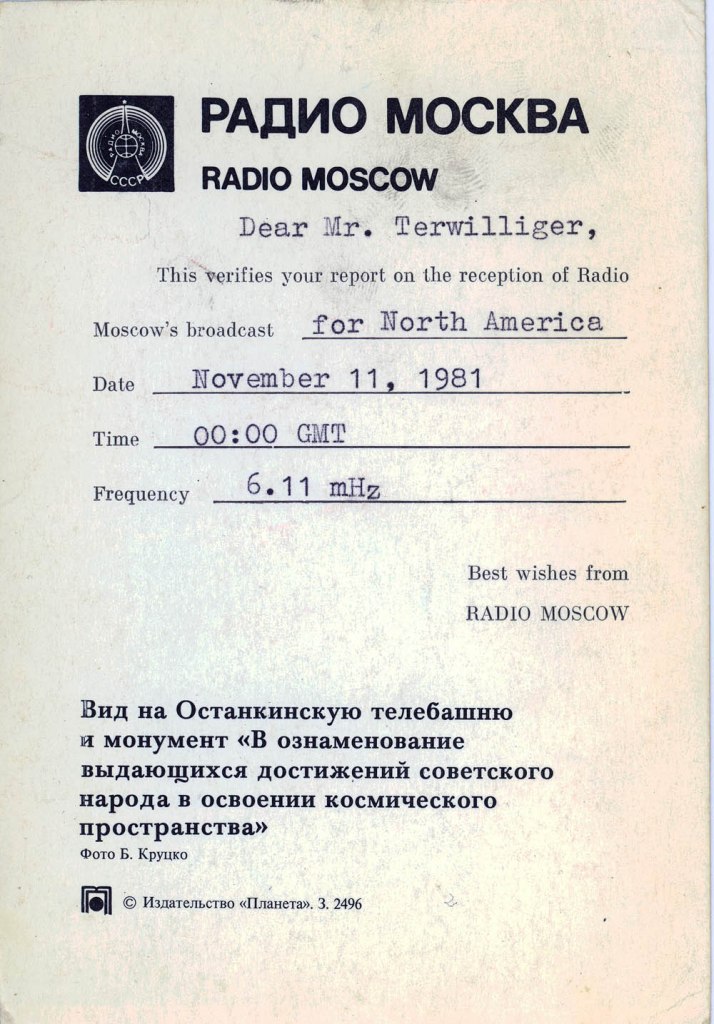
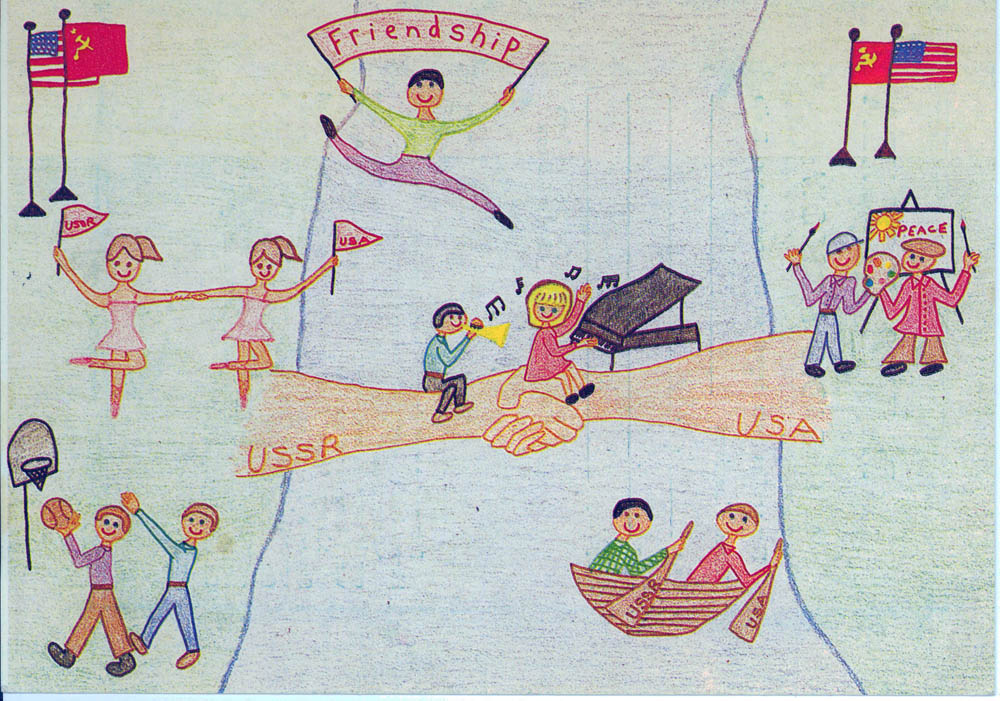
Radio Moscow – USSR



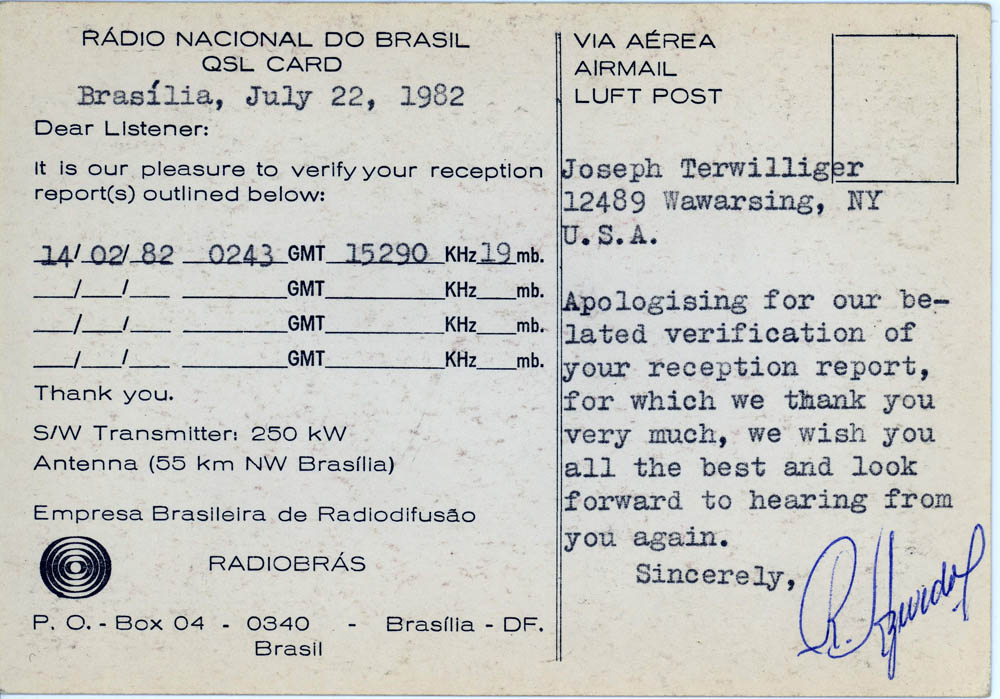
Radio Nacional do Brasil – Brazil

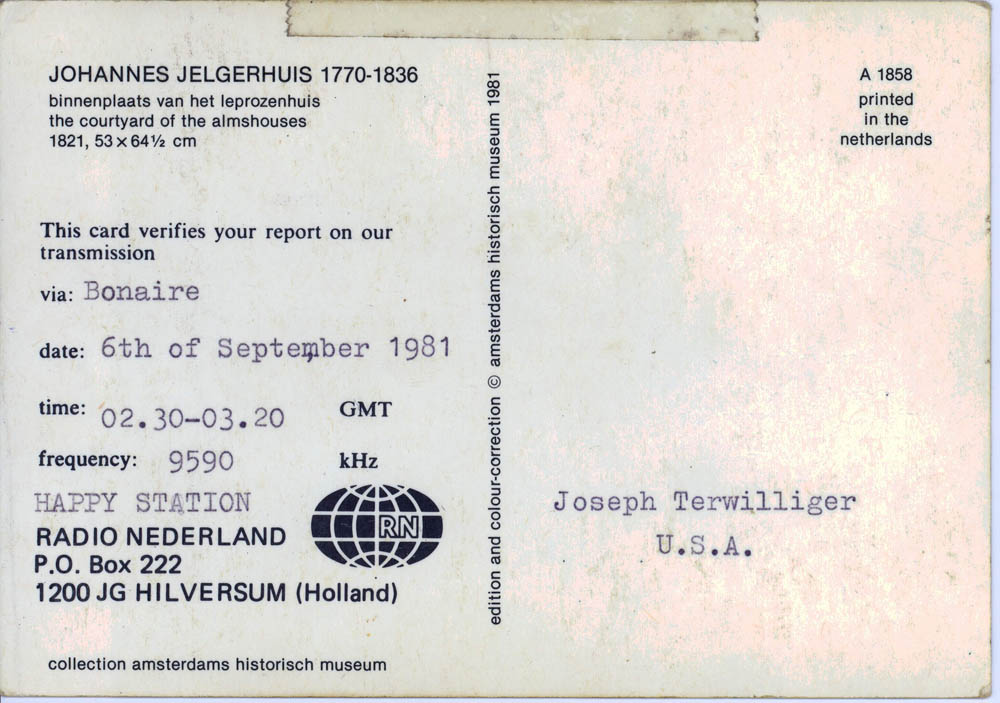
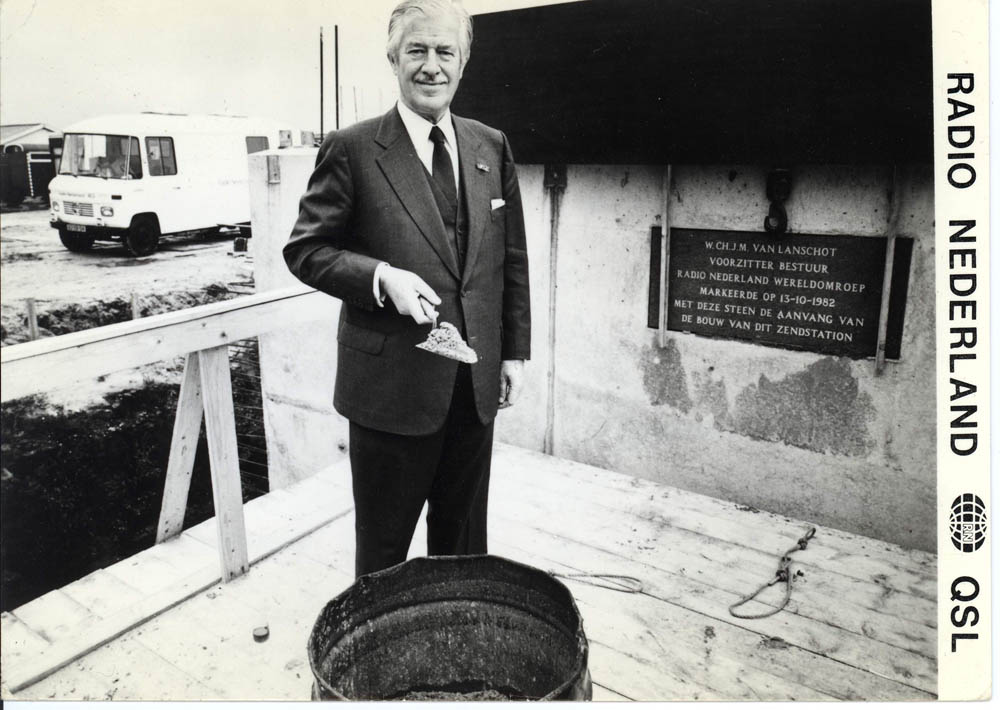
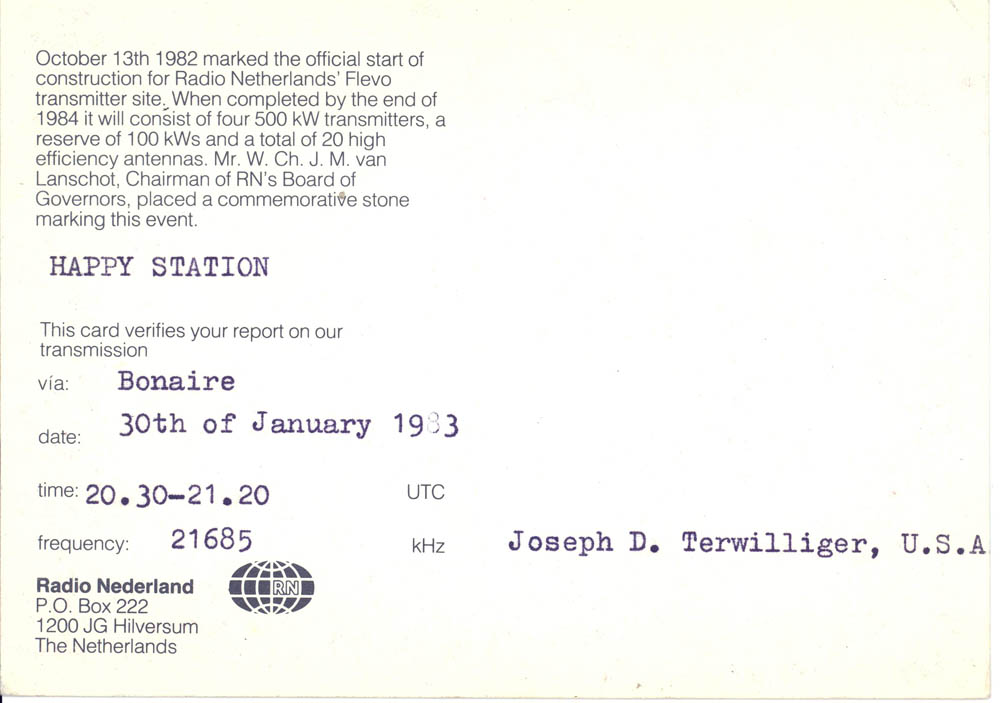
Radio Netherlands



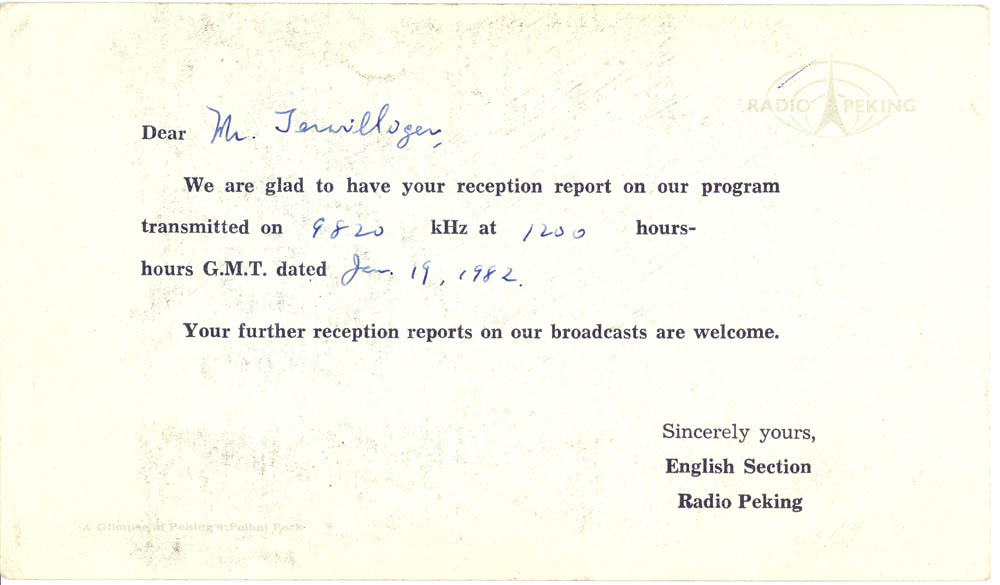
Radio Peking – China

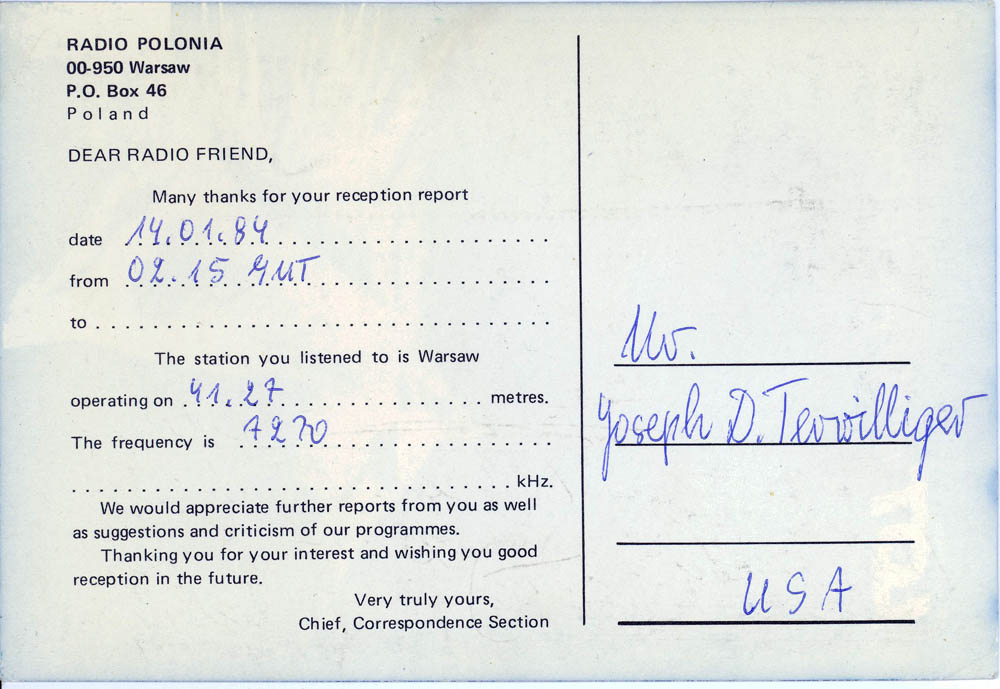
Radio Polonia – Poland



Radio Portugal


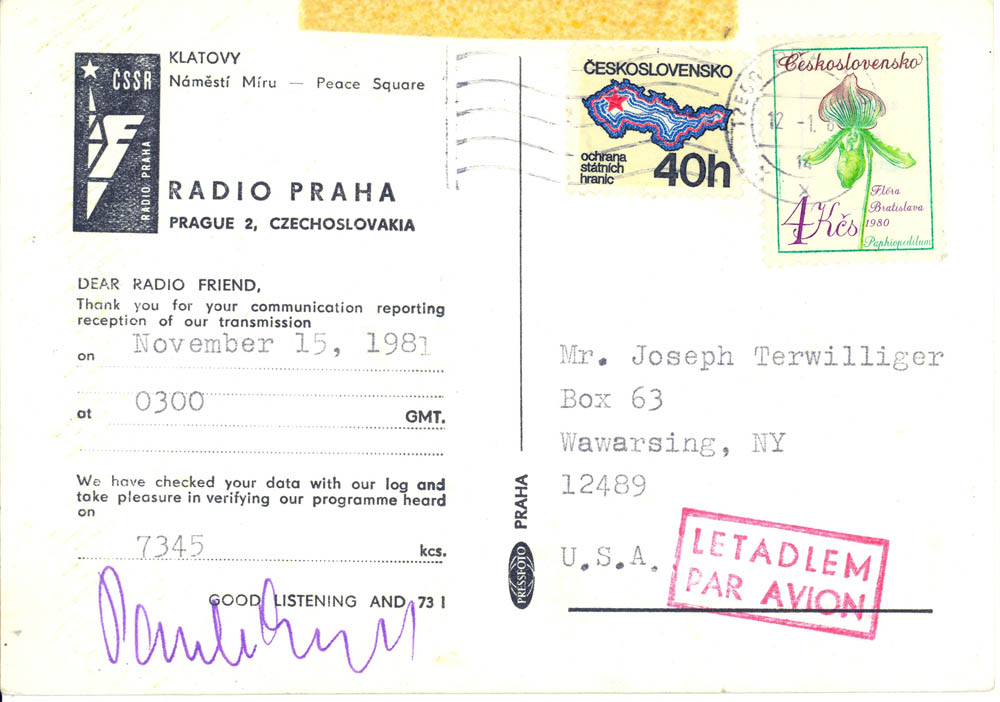
Radio Prague – Czechoslovakia



Radio Pyongyang (North Korea)


Radio RSA – South Africa


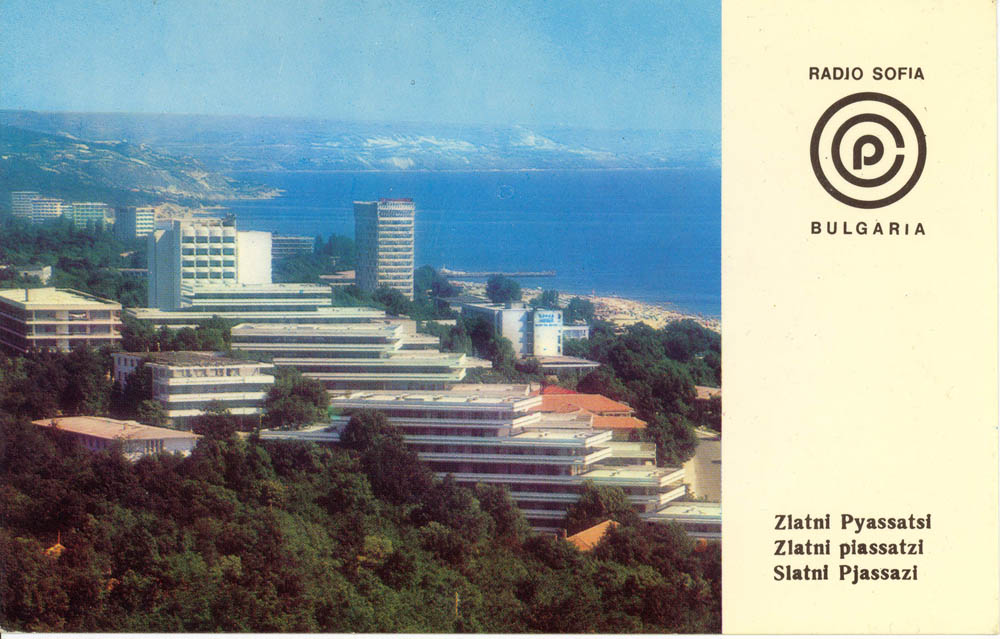
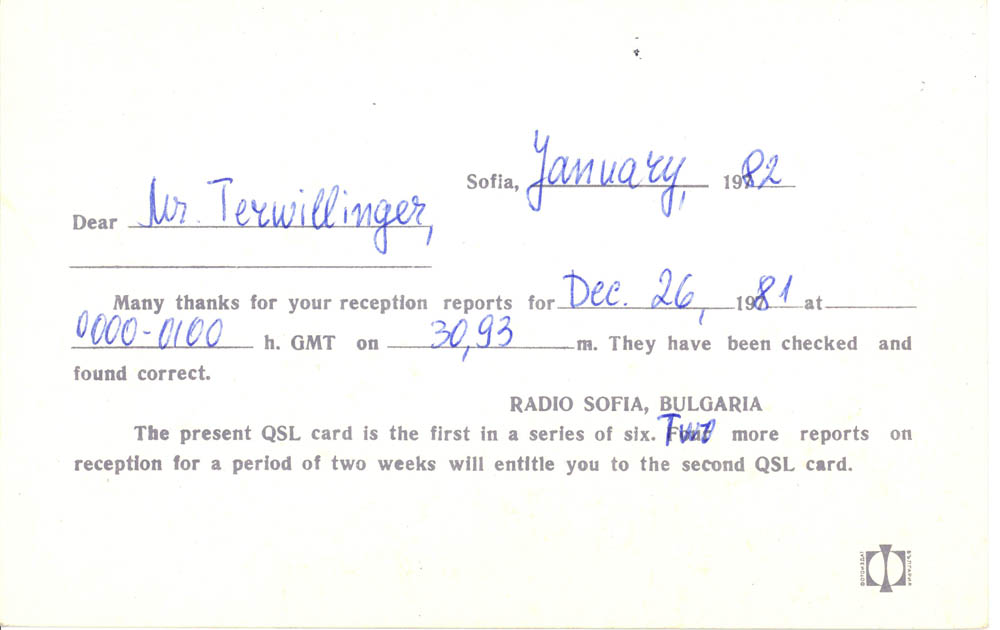
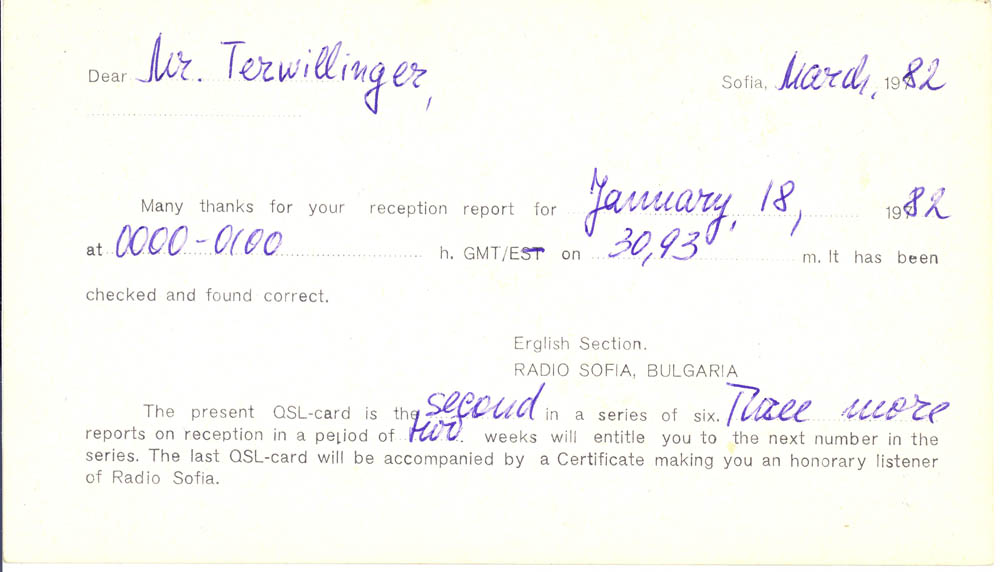
Radio Sofia – Bulgaria

Radio Station Peace and Progress – USSR


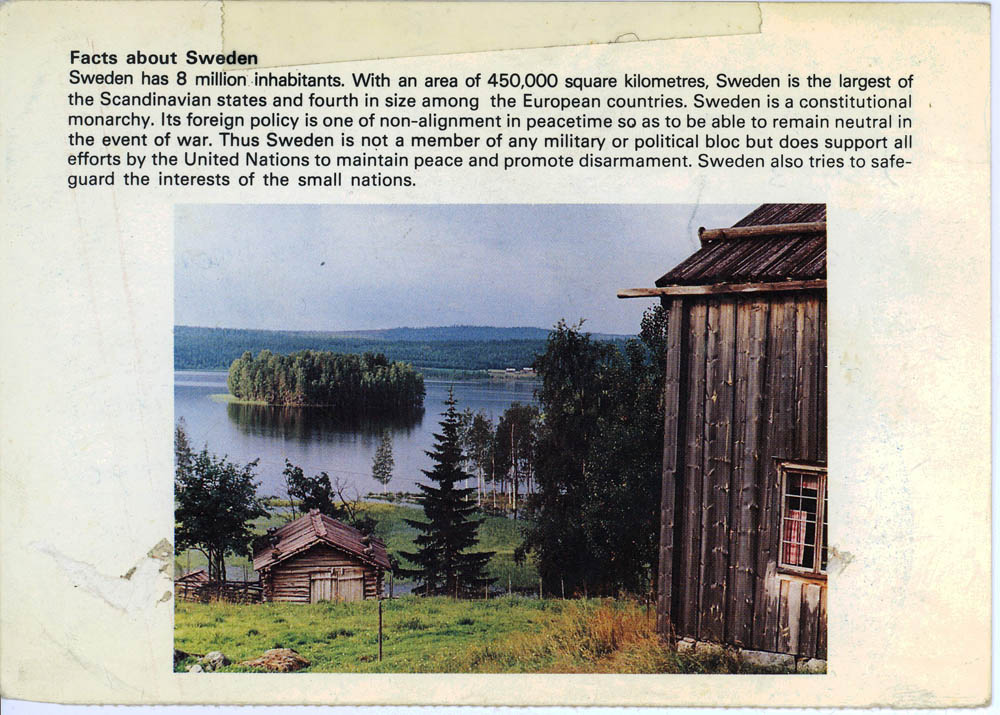
Radio Sweden

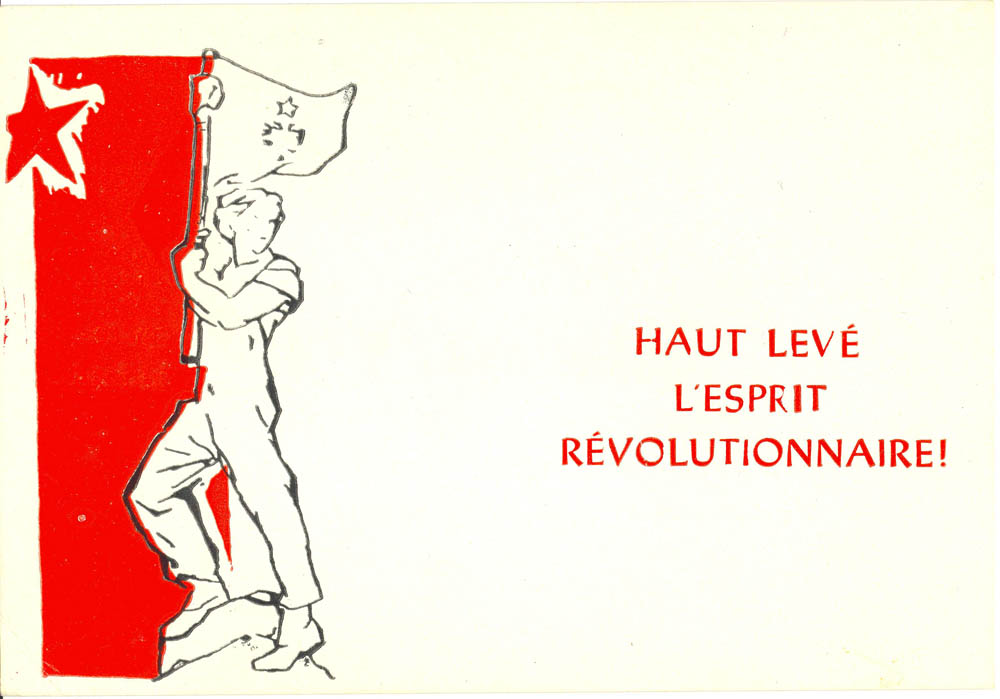
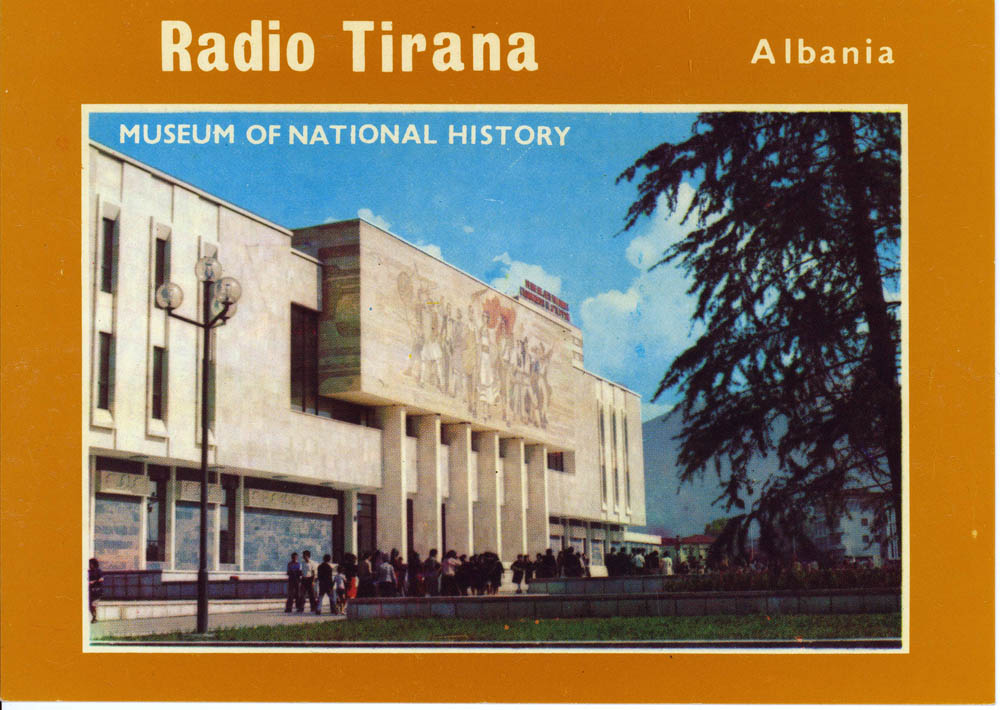
Radio Tirana – Albania


Radio Vaticana – Vatican City


Radio Vilnius – Lithuanian SSR


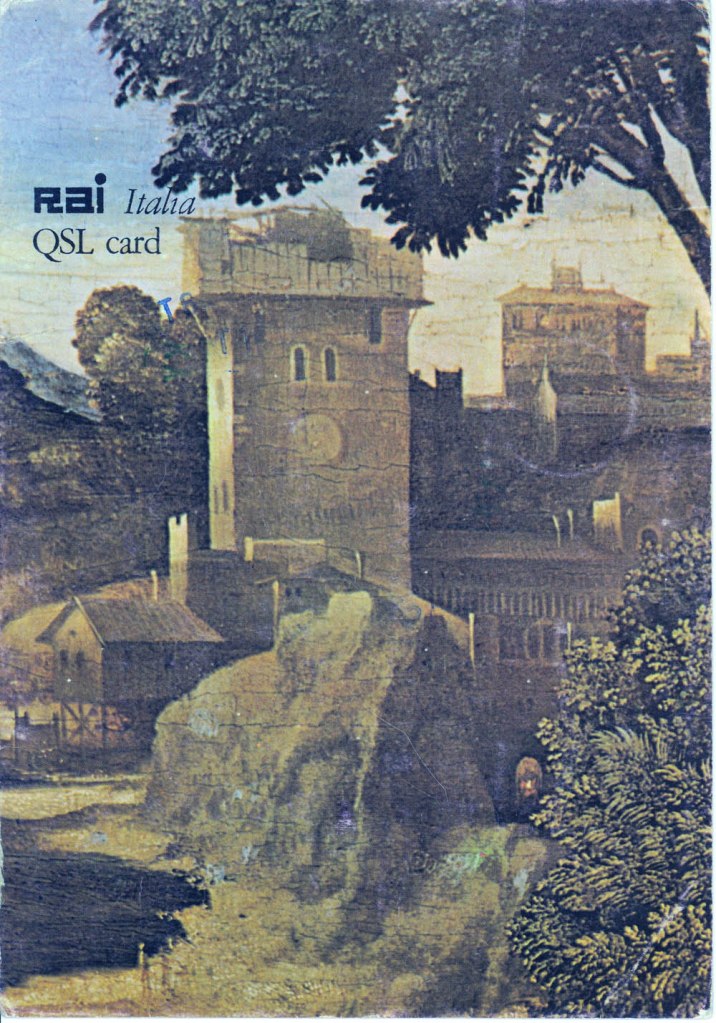
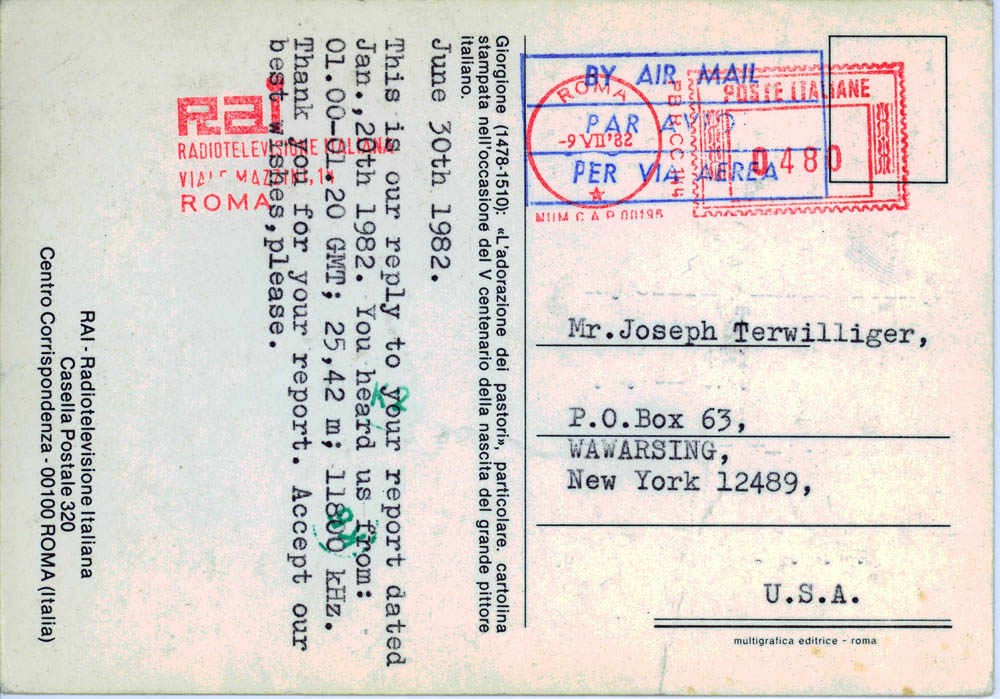
RAI – Italy
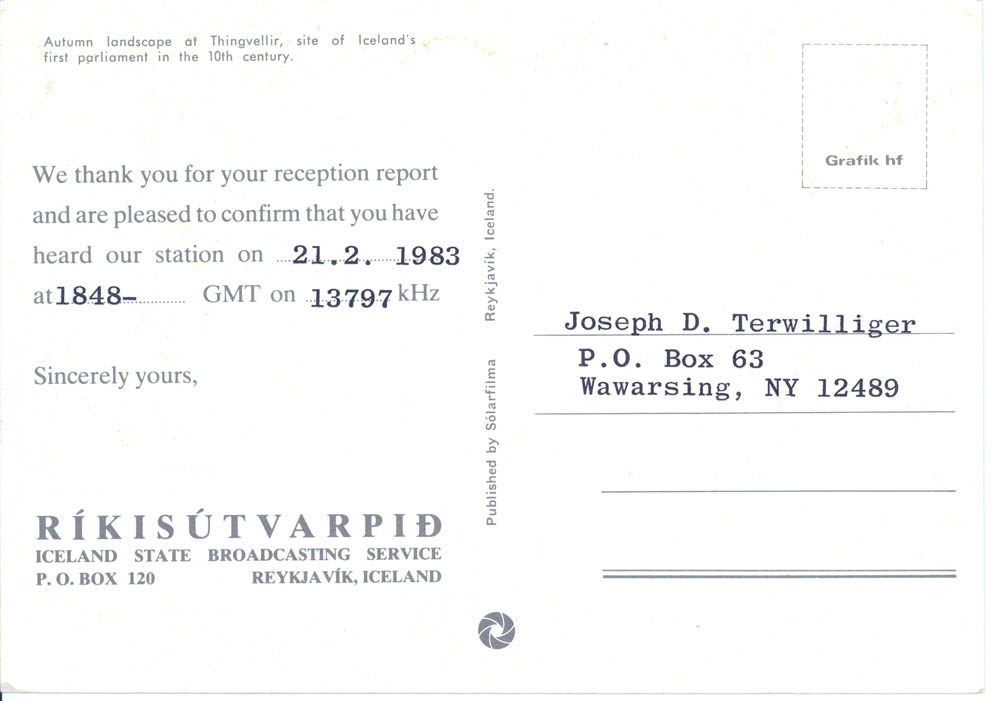
Rikisutvarpid – Iceland

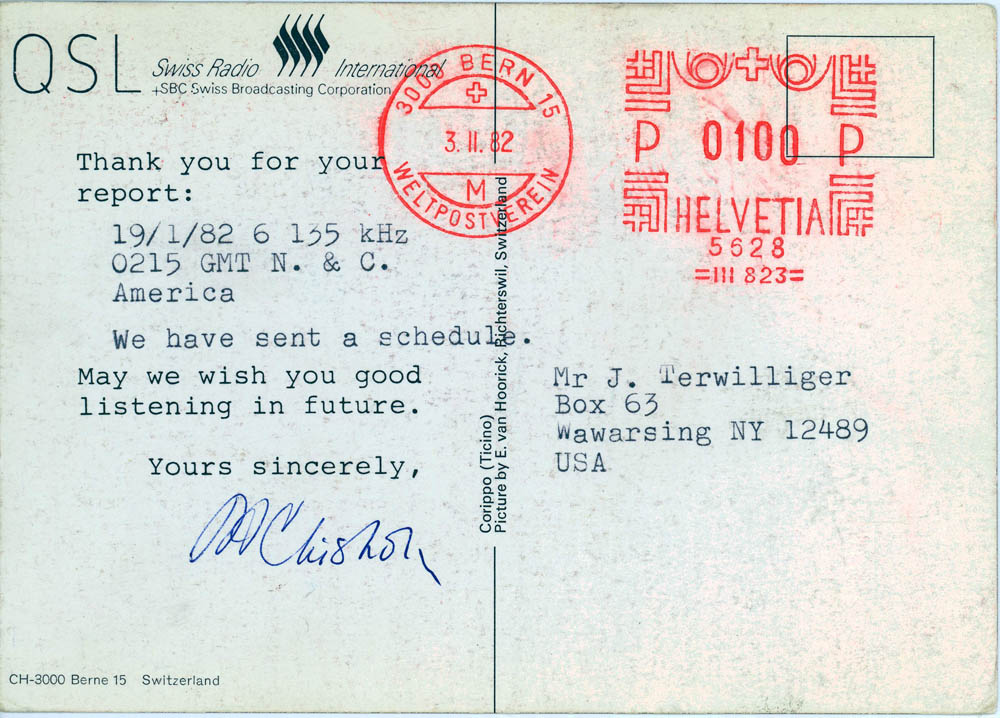
Swiss Radio International – Switzerland

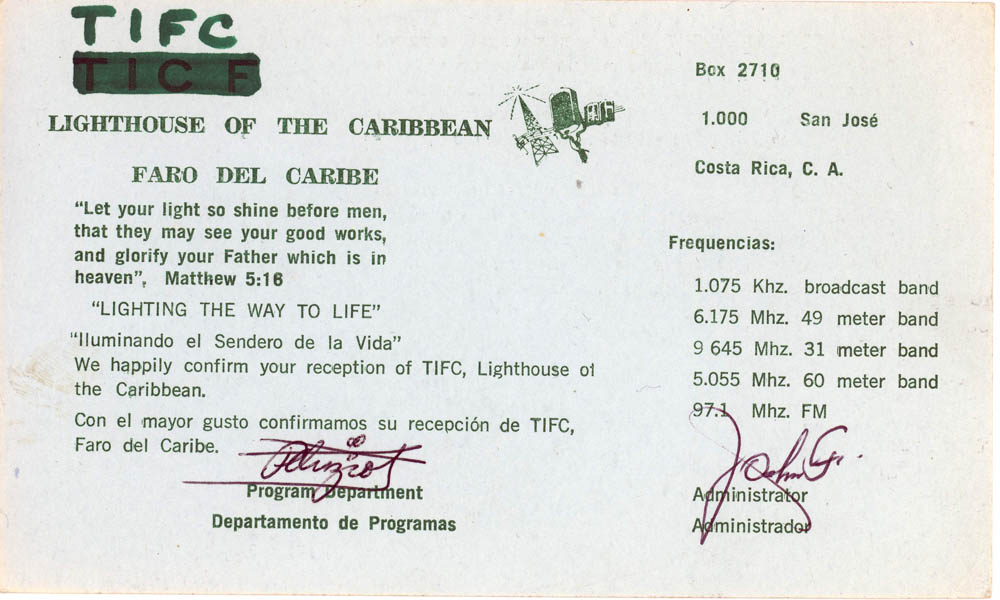
TIFC – Costa Rica

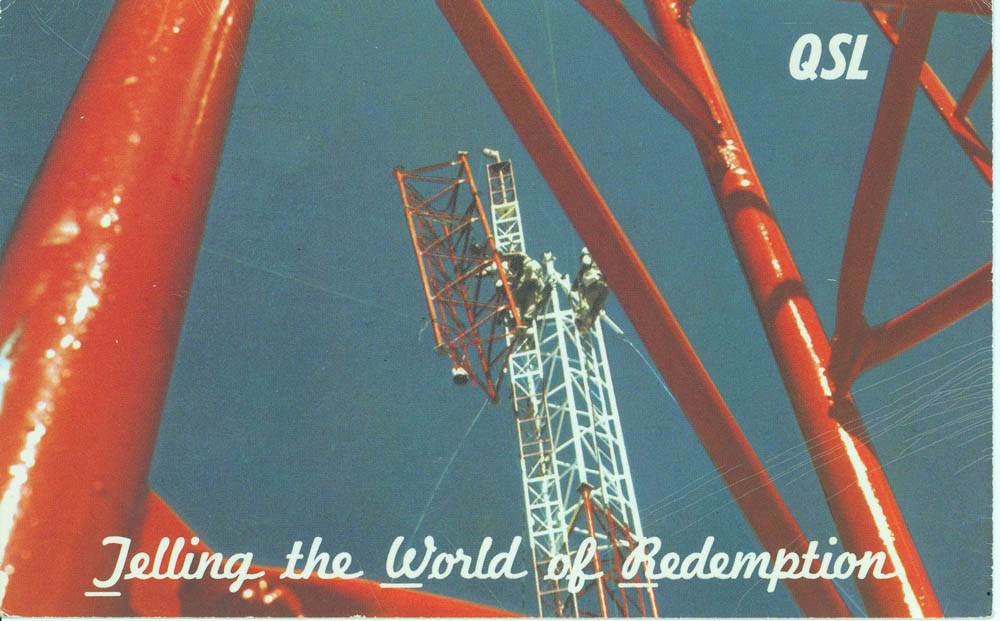
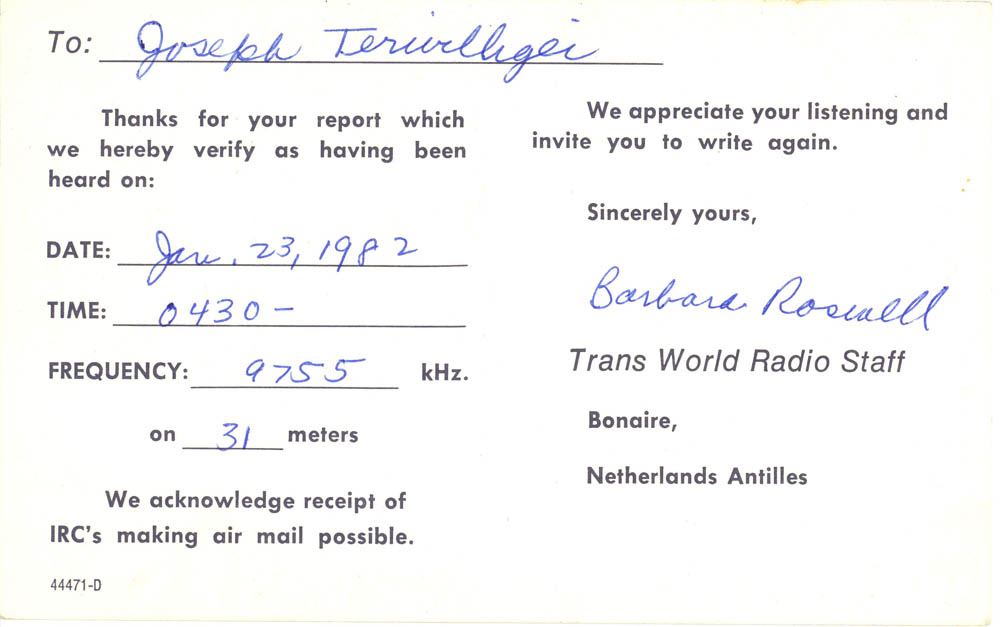
Trans World Radio – Bonaire
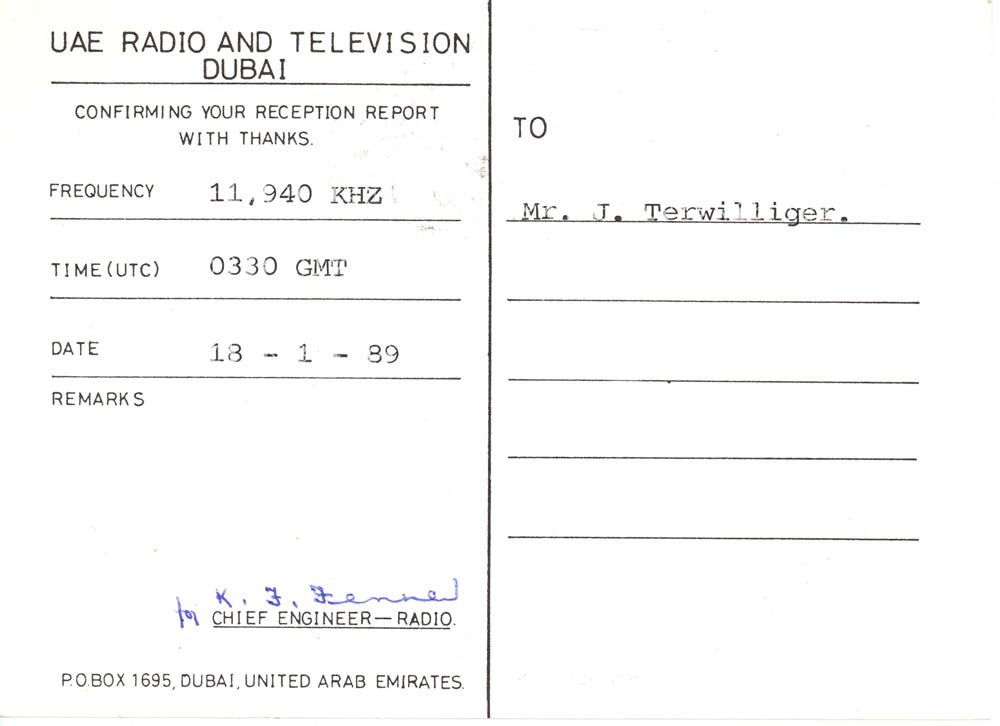
UAE Radio – Dubai


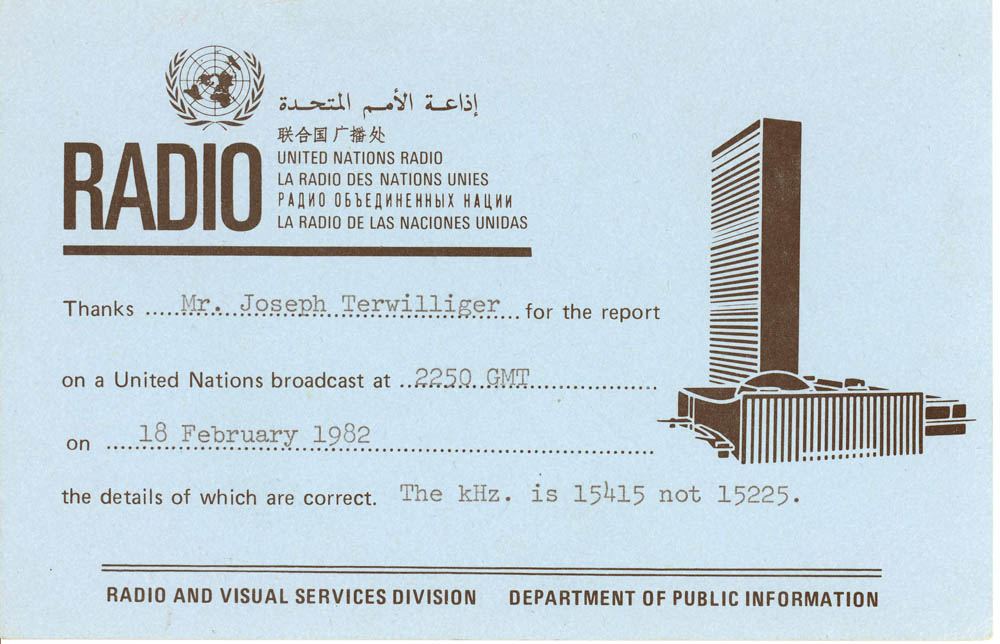
United Nations Radio
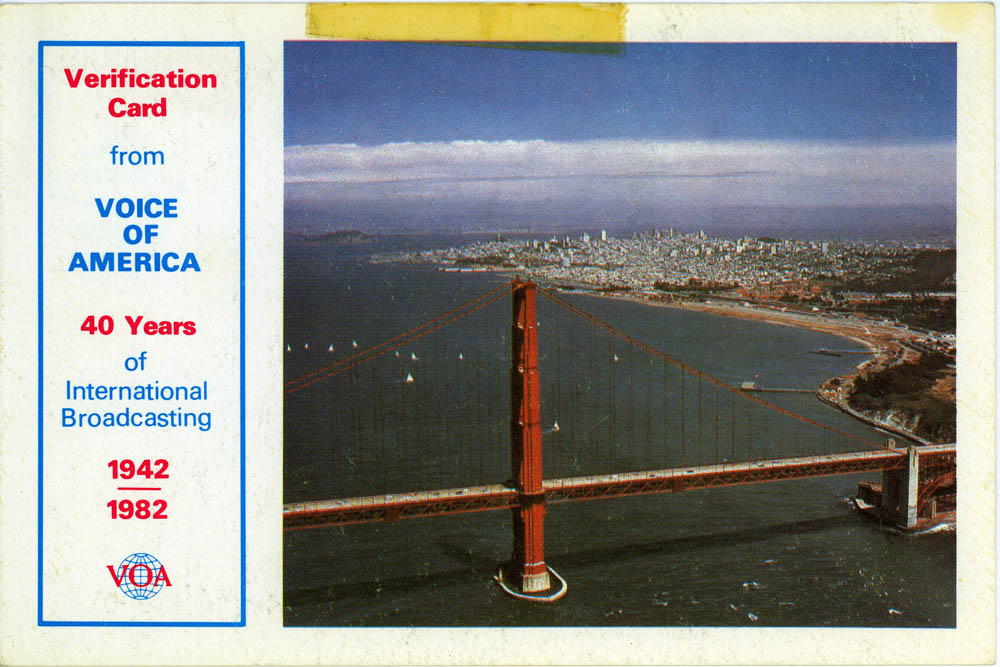
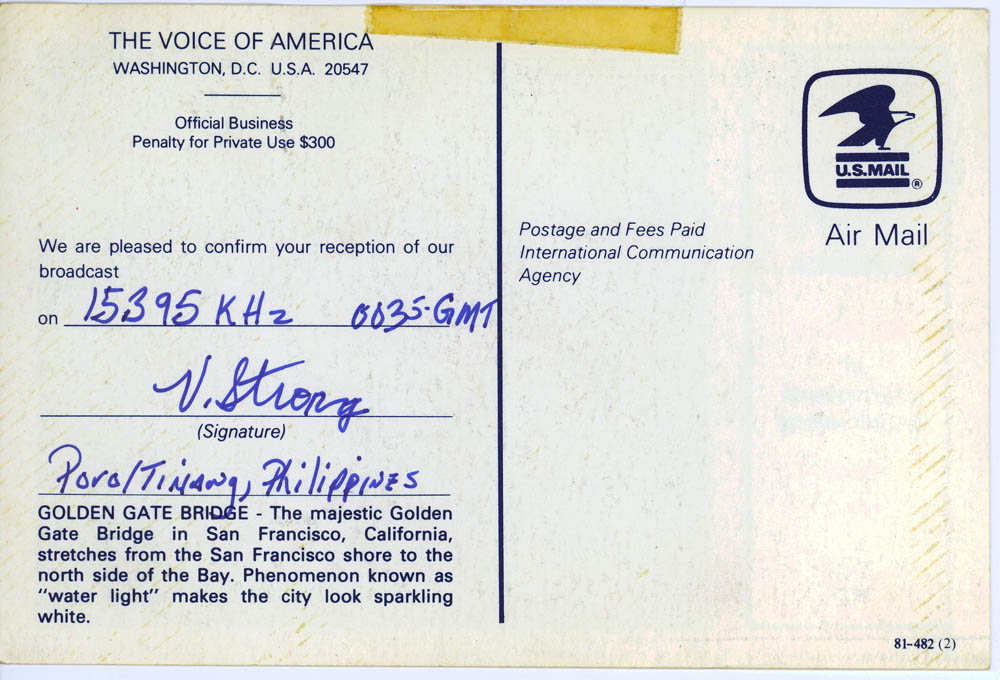
Voice of America
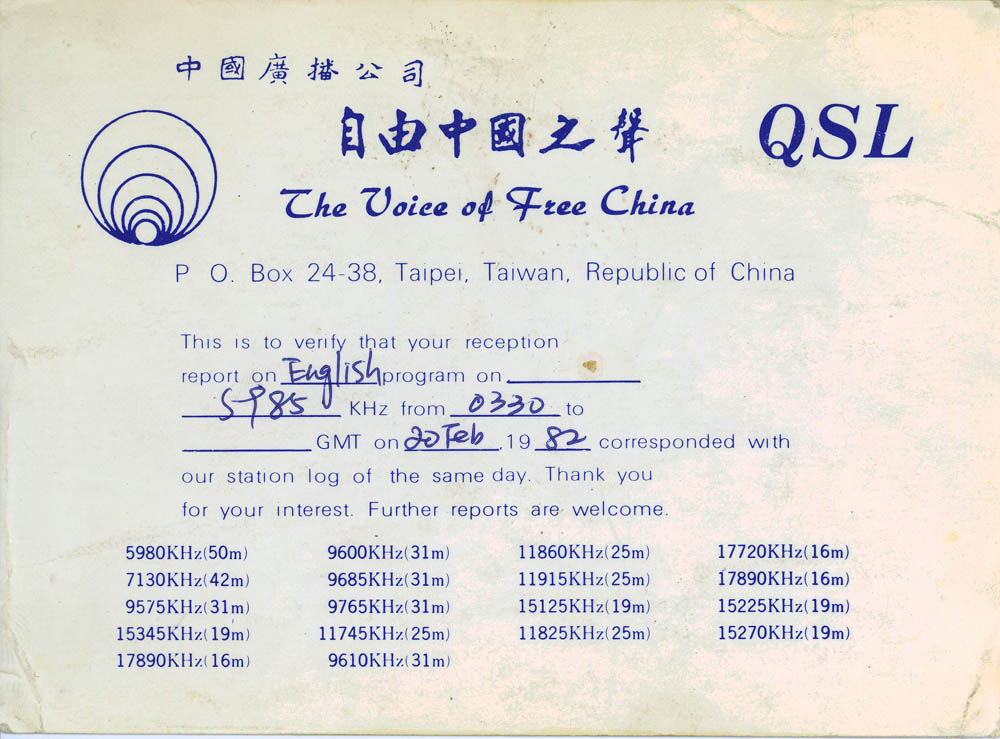
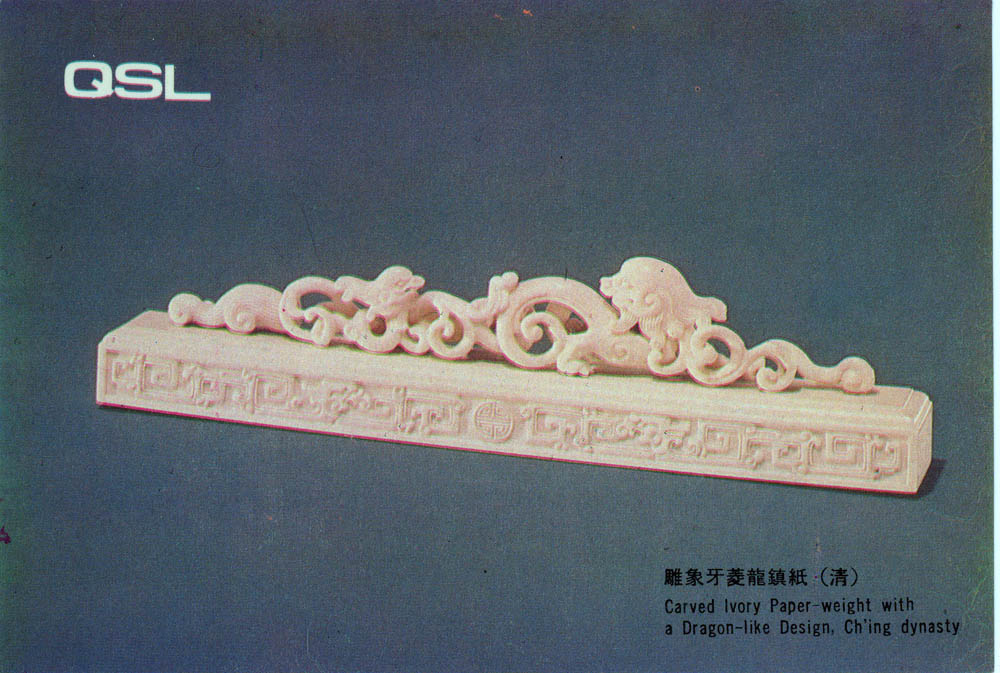
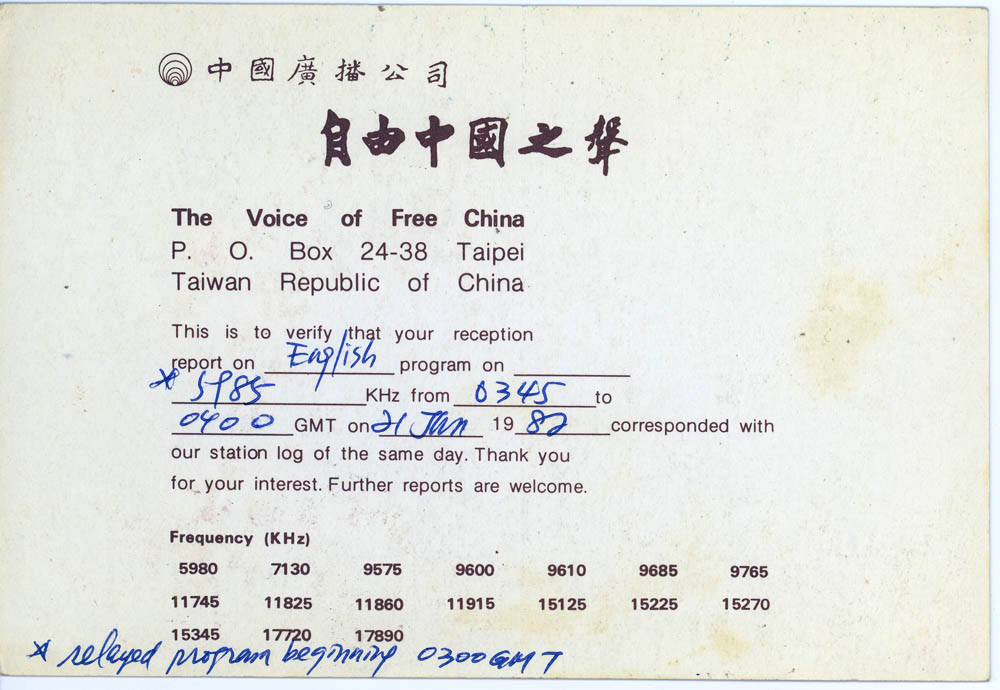
Voice of Free China – Taiwan

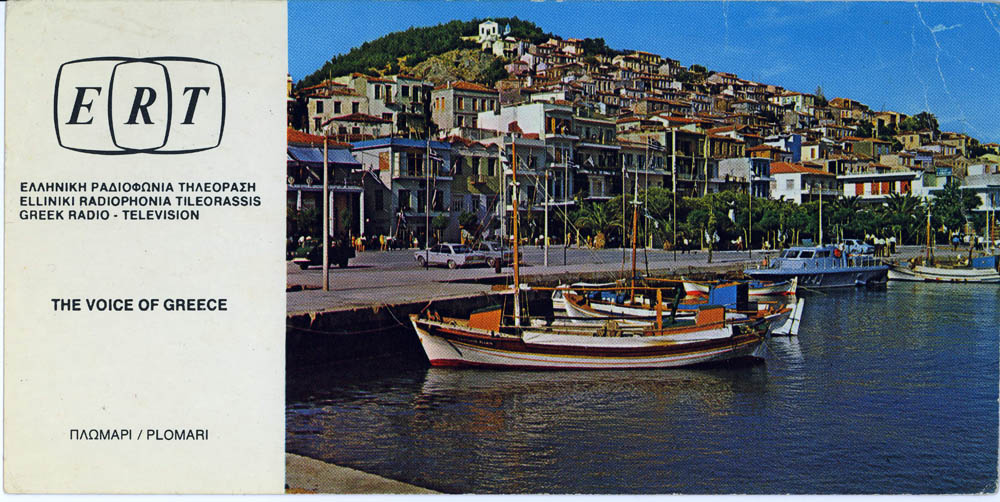
Voice of Greece

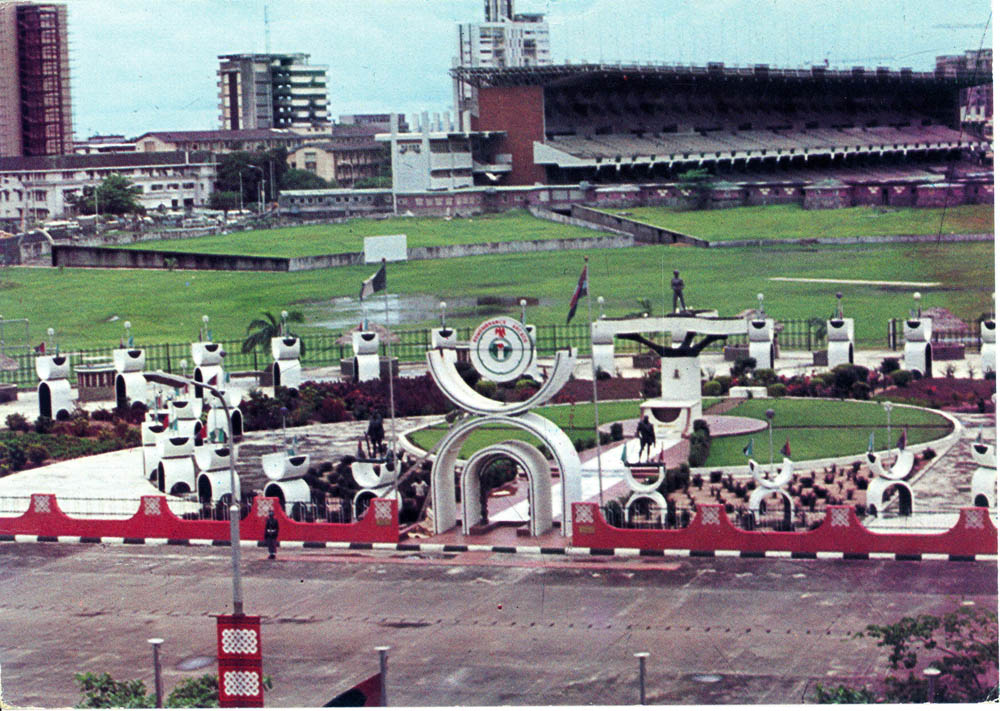
Voice of Nigeria

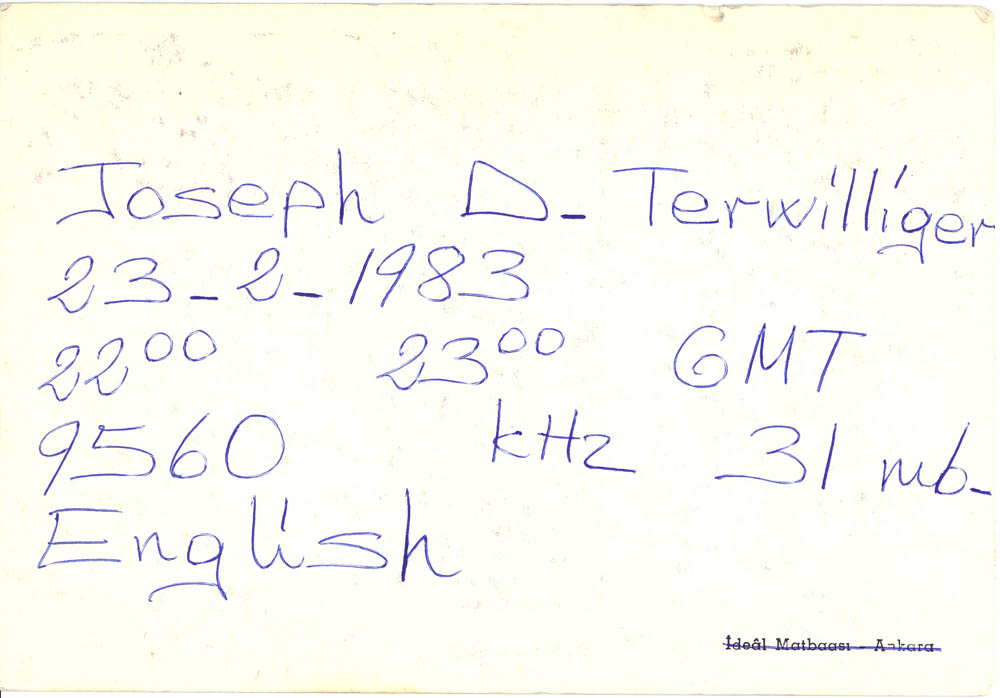
Voice of Turkey

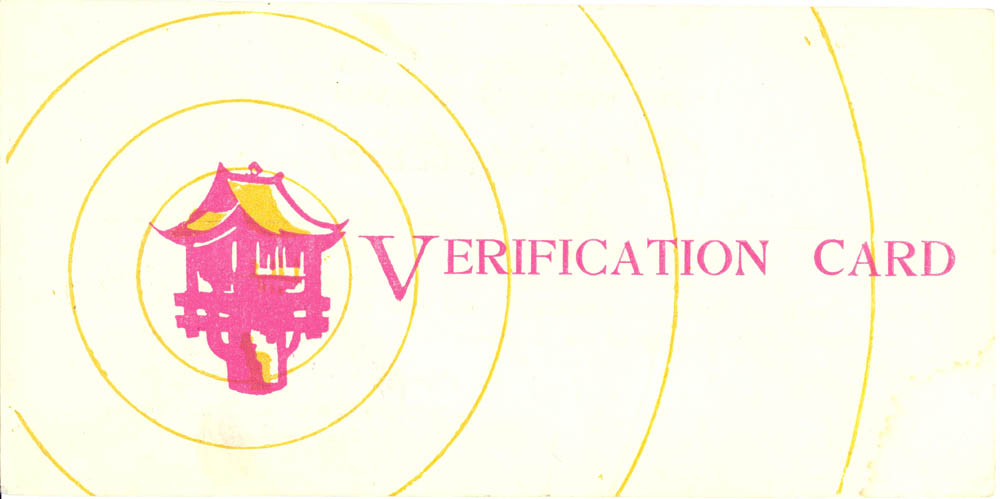
Voice of Vietnam
WRNO – New Orleans
WWV – Time Signal


WYFR – USA

YVTO Time Signal – Venezuela