
Venezuela – Maracaibo Aging Project
When I was a graduate student, one of my classmates, Gladys Maestre, was a Venezuelan, and after she graduated Columbia, she took a position back home at the University of Zulia. She wanted to start a longitudinal study of aging in Maracaibo, a project that became the Maracaibo Aging Study, in which she went door to door in the neighborhood of Santa Lucia in Maracaibo, and collected information about every individual born before 1944 and their family members.


When we received a training grant between Columbia and Zulia in the late 90s, the study expanded to another neighborhood, the barrio of Santa Rosa, where people still live on palafitos, platforms over the top of the water of Lake Maracaibo.

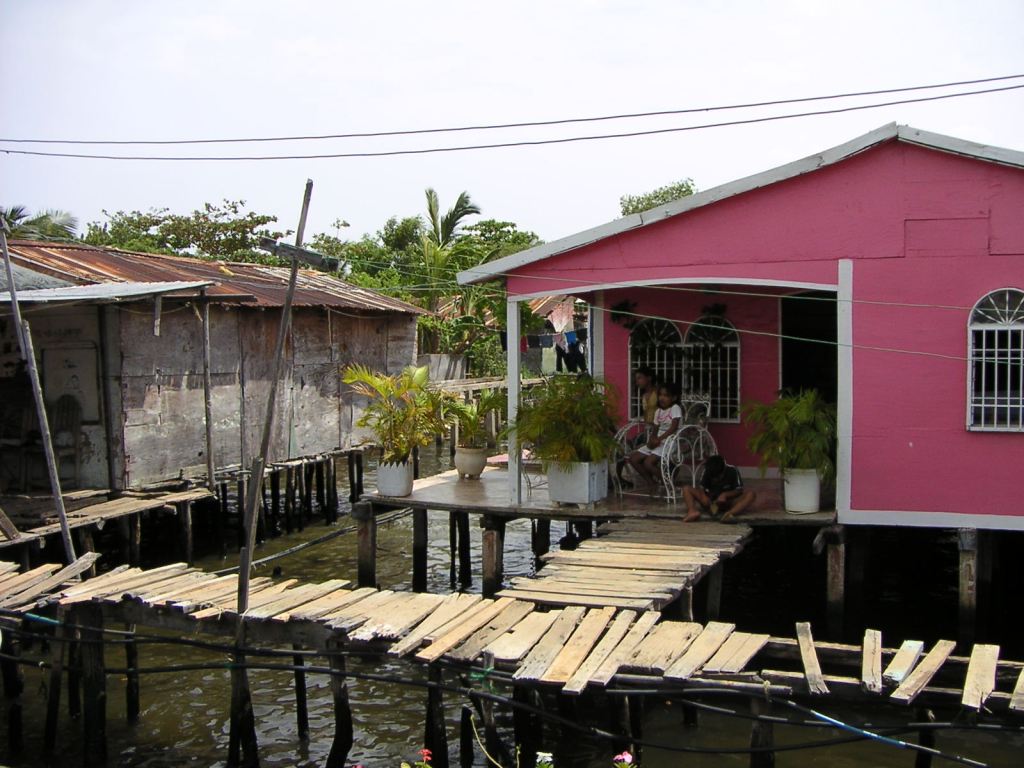
In Santa Lucia, the study participants are middle class and urban, with reasonable access to health care, consisting mostly of small nuclear families living in that neighborhood. On the other hand the Santa Rosa population is basically one large pedigree of several thousand people living in poverty, exposed to the heavy metal pollution from the Venezuelan oil industry, and mostly infected with intestinal parasites. While in Santa Rosa, there is a significant risk of mortality at young ages from violence, infectious disease, and accidents, the people who survive to old age are remarkably more healthy than the more prosperous urban residents of Santa Lucia. We have continued to follow up this population for the past 25 years, and continue working in Venezuela to this very day, despite the political turmoil and economic crises facing that country. We collected longitudinal data for such traits as 24-hour blood pressure monitoring, structural MRI of the brain, retinal imaging, the usual blood chemistry and questionnaire-based measures and much more. This brief lecture I presented as part of our online course on Logical Reasoning in Human Genetics through the Columbia Global Center in Tunis in 2022 describes the history and successes of this project in more detail
References about study design for this project include the following:
Maestre GM, Pino-Ramirez G, Molera AE, Silva ER, Zambrano R, Falque L, Gamero MP, Sulbaran TA (2002) The Maracaibo Aging Study: Population and Methodological Issues. Neuroepidemiology 21(4):194-201
Maestre GE, Pirela RV, Paz CL, Melgarejo JD, Mena LJ, Chavez CA, Leendertz R, Petitto M, Silva E, Calmón GE, Al-Aswad L, Lee JH, Terwilliger JD. (2021) Research on aging during the Venezuelan humanitarian crisis: the experience of the Maracaibo aging study. BMC Public Health 2021 Mar 9:21(1):473
Maracaibo Aging Study – Beginnings
My first trip to Venezuela was in 2003, when we began the second cohort study in Santa Rosa. We visited the community, gave a few lectures about what we hoped to do and then had a town hall meeting with the community where we explained what we hoped to do and why, and answer any questions they might have. The people there were very nice and friendly and they asked reasonable questions. Of course nobody spoke English, and they apparently had not even heard or seen someone speak English before (as I said they are an impoverished indigenous community along the shores of Lake Maracaibo, who often have never left their community). They asked who these weird looking people were that spoke the “outer space” language. Anyway, one gentleman asked me what they would get out of participating in the study, and I responded that they would be contributing to the advance of scientific knowledge, but probably nothing we did would benefit them or their health, but could lead to new understanding that could help future generations, emphasizing that genetic studies are different in every community and it would be a chance for them to be represented in international research. But that aside from getting well-measured phenotypes, like the MRI and retinal image data that might be of value to their physicians, participation would probably not benefit them personally at all. The man responded that I was a real man, and he respected that I was honest and did not try to bullshit them. I treated them with the respect they deserved and got the same in return, and they were eager to participate in the study after that.



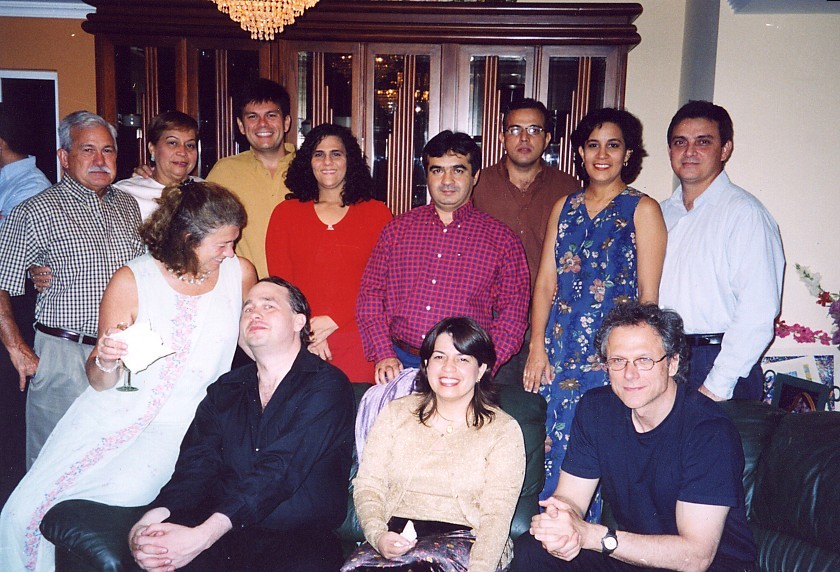
As a statistical geneticist, I did not visit the site too often, as my role was study design and analysis and consulting. But I was co-Principal Investigator on several of the NIH grants that funded the project over the years. As such I visited Venezuela on several occasions to lecture – we taught a computer-based statistical genetics course in 2005 at the University of Zulia together with my colleagues Joseph H, Lee and Harald Göring.


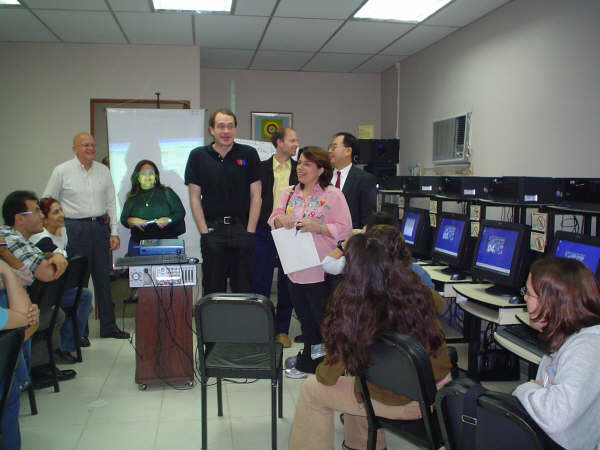
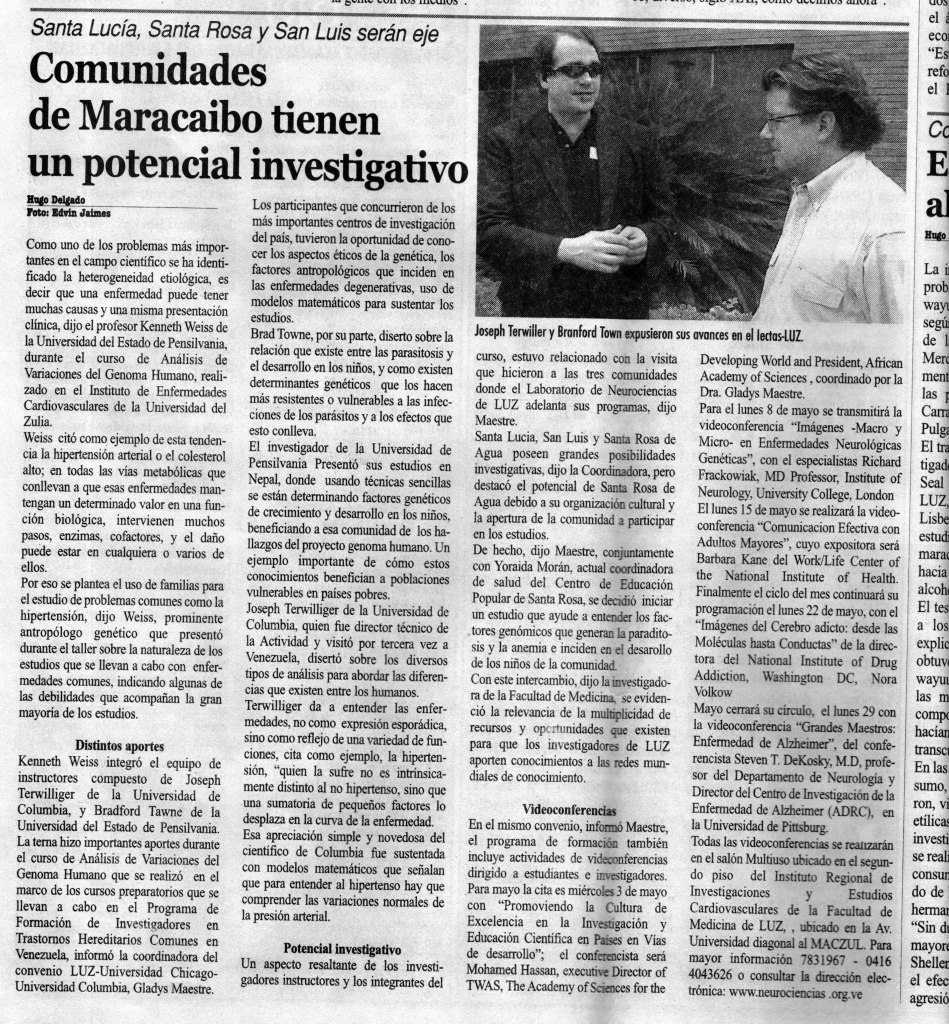
Then, in 2006, I returned to Maracaibo to teach another course – a version of “Logical Reasoning in Human Genetics” – at the Cardiology Institute with Brad Towne from Wright State University, with additional lectures provided by direct video link to Penn State University where Ken Weiss and Anne Buchanan gave a few lectures on the last day of the course. This was long before the age of Zoom, so it required special equipment and a dedicated studio on the Penn State campus and at the university, which was paid for by a training grant from NIH.
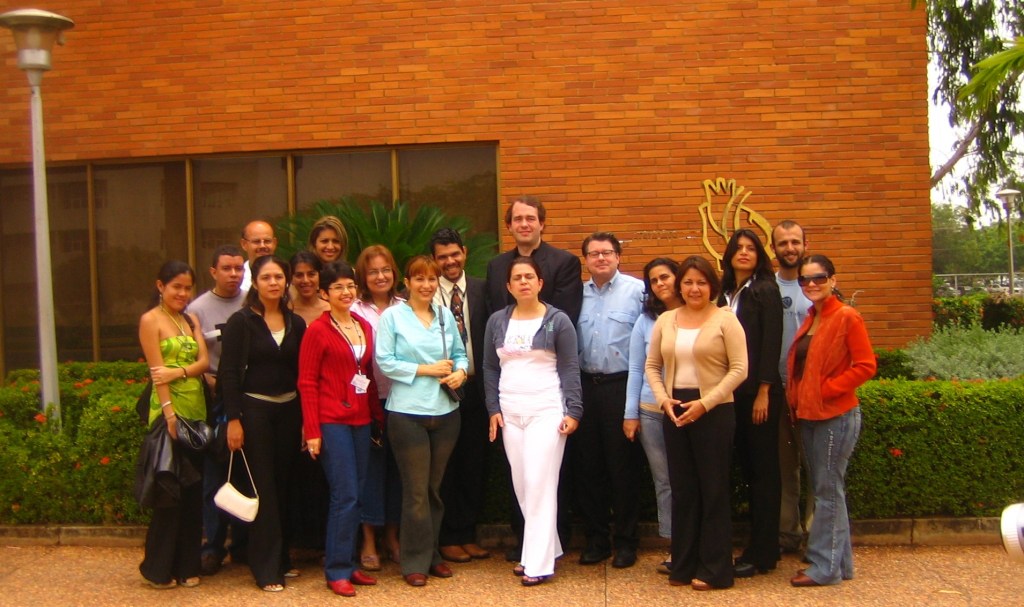
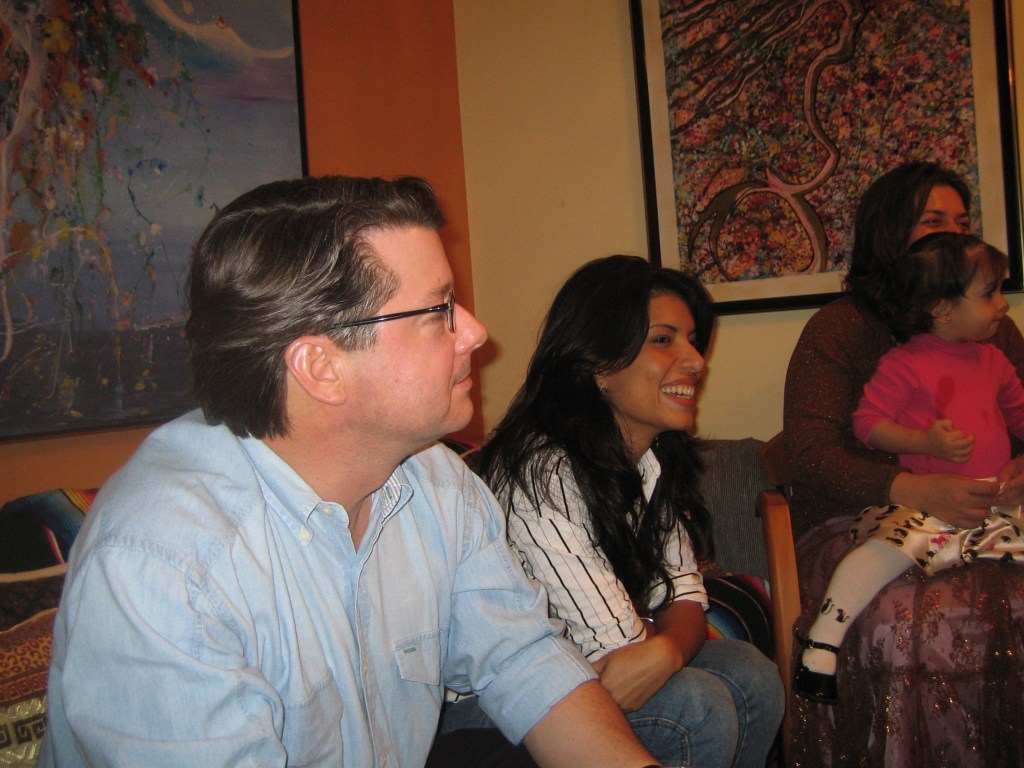
The following video is a montage of photos of Santa Lucia and Santa Rosa neighborhoods of Maracaibo as well as various photos from the above-described visits in 2003, 2005, and 2006.
This last photo montage is from an excursion to the Laguna de Sinamaica where Vespucci first visited when he “discovered” Venezuela. He saw these people living on platforms over the water (palafitos) and thought their settlement reminded him of “Little Venice” hence the name Venezuela… Apparently the reason for the houses being constructed over the top of the water was that there were huge snakes on land that would eat people in their sleep, so this was a way to prevent that from happening. Of course given the intense heat in Northern Venezuela, it also provides some cooling relief to be above the lagoon like that.
The Maracaibo Aging Project continues today, and is now headquartered at the University of Texas – Rio Grande Valley, where my long-time collaborator and friend Gladys Maestre currently works. She and Jesus Melgarejo still lead the project as we continue collecting and analyzing data 27 years later. Here is a lecture about the results of the project from Dr. Melgarejo as part of our Logical Reasoning in Human Genetics course held online through the Columbia Global Center in Tunis.
And here is a lecture by Gladys Maestre about the project:
The Ins and Outs of Sustaining a Longitudinal Cohort for Genetic Studies https://www.facebook.com/CGCTunis/videos/1186421122101206
Finally, here is a list of my papers with results of the Maracaibo Aging Project to describe many of the accomplishments of this study.
Garza SB, Charisis S, Patil D, Vatcheva KP, Mejia-Arango S, Mena LJ, Alliey-Rodriguez N, Satizabal CL, Chavez CA, Gaona C, Silva E, Lee JH, Terwilliger JD, Gutierrez J, Seshadri S, Maestre GE, Melgarejo JD. (2025) Sex‐Differences in the Association of 24‐h Blood Pressure Level and Variability with Subclinical Markers of Cerebral Small Vessel Disease. Alzheimers Dement. 2025 Jan 9;20(Suppl 7):e089898
Pirela-Mavarez RP, Xu C, Terwilliger JD, Garza N, Reyes R, Oropeza O, Manusov EG, Maestre CA, Alliey-Rodriguez N, Mejia-Arango S, Melgarejo JD, de la Garza-Parker C, de Erasquin GA, Gil M, Escobar R, Patel NK, Seshadri S, Maestre GE (2025) Key issues in recruitment for minority aging research in humanitarian settings. Alzheimers Dement. 2025 Jan 9;20(Suppl 7):e090987.
Melgarejo JD, Charisis S, Patil D, Vatcheva KP, Mejia-Arango S, Mena LJ, Alliey-Rodriguez N, Satizabal CL, Chavez CA, Gaona C, Silva E, Calmon G, Lee JH, Terwilliger JD, Gutierrez J, Seshadri S, Maestre GE. (2025) Association of Cognitive Function with Mortality and Cardiovascular Risk. Alzheimers Dement
. 2025 Jan 9;20(Suppl 7):e089353.
Melgarejo JD, Vatcheva KP, Mejia-Arango S, Charisis S, Patil D, Mena LJ, Garcia A, Alliey-Rodriguez N, Satizabal CL, Chavez CA, Gaona C, Silva E, Mavarez RP, Lee JH, Terwilliger JD, Blangero J, Seshadri S, Maestre GE. (2024) Association of longitudinal changes in 24-h blood pressure level and variability with cognitive decline. J Hypertens. 2024 Nov 1(11):1985-1993.
Melgarejo JD, Patil D, Mena LJ, Vatcheva KP, Garcia JA, Satizabal CL, Chavez CA, Pirela RV, Silva E, Calmon G, Lee JH, Terwilliger JD, Seshadri S, Maestre GE. (2024) Association of Variability and Hypertensive Loads in 24-h Blood Pressure With Mortality and Cardiovascular Risk. Am J Hypertens. 2024 Apr 15;37(5):323-333.
Arteaga-Bracho EE, Melgarejo JD, Chavez CA, Terwilliger JD, Lee JH, Pino-Ramirez G, Maestre GE (2021) Cognitive domains in low-literacy populations: The experience of the Maracaibo Aging Study. In “Understanding the Context of Cognitive Aging: Mexico and the United States” (Eds. Angel JL and Ortega, ML). Springer.
Melgarejo JD, Maestre GE, Gutierrez J, Thijs L, Mena LJ, Gaona C, Leendertz R, Lee JH, Chávez CA, Calmon G, Silva E, Wei D, Terwilliger JD, Vanassche T, Janssens S, Verhamme P, Bos D, Zhang ZY. (2022) Subclinical Magnetic Resonance Imaging Markers of Cerebral Small Vessel Disease in Relation to Office and Ambulatory Blood Pressure Measurements. Front Neurol 2022 Jul 14:13:908260
Melgarejo JD, Eijgen JV, Maestre GE, Al-Aswad LA, Thijs L, Mena LJ, Lee JH, Terwilliger JD, Petitto M, Chávez CA, Brito M, Calmon G, Silva E, Wei DM, Cutsforth E, Keer KV, Gustavo De Moraes C, Vanassche T, Janssens S, Stalmans I, Verhamme P, Staessen JA, Zhang ZY. (2022) Open-Angle Glaucomatous Optic Neuropathy Is Related to Dips Rather Than Increases in the Mean Arterial Pressure Over 24-H. Am J Hypertens 2022 Aug 1:35(8):703-714
Melgarejo JD, Maestre GE, Mena LJ, Lee JH, Petitto M, Chávez CA, Calmon G, Silva E, Thijs L, Al-Aswad LA, Terwilliger JD, De Moraes CG, Wei FF, Vanassche T, Verhamme P, Staessen JA, Zhang ZY. (2021) Normal-tension glaucomatous optic neuropathy is related to blood pressure variability in the Maracaibo Aging Study. Hypertens Res 2021 Sep:44(9):1105-1112
Maestre GE, Pirela RV, Paz CL, Melgarejo JD, Mena LJ, Chavez CA, Leendertz R, Petitto M, Silva E, Calmón GE, Al-Aswad L, Lee JH, Terwilliger JD. (2021) Research on aging during the Venezuelan humanitarian crisis: the experience of the Maracaibo aging study. BMC Public Health 2021 Mar 9:21(1):473
Castro F, Melgarejo J, Chavez CA, de Erausquin GA, Terwilliger JD, Lee JH, Maestre GE. (2021) Total Plasma Homocysteine and Depressive Symptoms in Older Hispanics. J Alzheimers Dis 2021: 82(s1):S263-S269
Melgarejo JD, Aguirre-Acevedo DC, Gaona C, Chavez CA, Calmon GE, Silva ER, de Erasquin GA, Gil M, Mena LJ, Terwilliger JD, Arboleda H, Scarmeas N, Lee JH, Maestre GE (2020) Nighttime Blood Pressure Interacts with APOE Genotype to Increase the Risk of Incident Dementia of the Alzheimer’s Type in Hispanics. J Alzheimers Dis 2020: 77(2):569-579.
De Moraes CG, Pettito M, Yepez JB, Sakuntabhai A, Simon-Loriere E, Zaidi MB, Prot M, Ruffie C, Kim SS, Allikmets R, Terwilliger JD, Lee JH, Maestre GE. (2018) Corrigendum: Optic neuropathy and congenital glaucoma associated with probable Zika virus infection in Venezuelan patients. JMM Case Rep. 2018 Aug 31;5(8):e005161.
Zaidi MB, De Moraes CG, Petitto M, Yepez JB, Sakuntabhai A, Simon-Loriere E, Prot M, Ruffie C, Kim SS, Allikmets R, Terwilliger JD, Lee JH, Maestre GE. (2018) Non-congenital severe ocular complications of Zika virus infection. JMM Case Rep. 2018 May 14;5(6):e005152.
Méndez AS, Melgarejo JD, Mena LJ, Chávez CA, González AC, Boggia J, Terwilliger JD, Lee JH, Maestre GE. (2018) Risk Factors for Orthostatic Hypotension: Differences Between Elderly Men and Women. Am J Hypertens. 2018 Jun 11;31(7):797-803.
De Moraes CG, Pettito M, Yepez JB, Sakuntabhai A, Simon-Loriere E, Zaidi MB, Prot M, Ruffie C, Kim SS, Allikmets R, Terwilliger JD, Lee JH, Maestre GE. (2018) Optic neuropathy and congenital glaucoma associated with probable Zika virus infection in Venezuelan patients. JMM Case Rep. 2018 Mar 14;5(5):e005145.
Melgarejo JD, Lee JH, Petitto M, Yépez JB, Murati FA, Jin Z, Chávez CA, Pirela RV, Calmón GE, Lee W, Johnson MP, Mena LJ, Al-Aswad LA, Terwilliger JD, Allikmets R, Maestre GE, De Moraes CG. (2018) Glaucomatous Optic Neuropathy Associated with Nocturnal Dip in Blood Pressure: Findings from the Maracaibo Aging Study. Ophthalmology. 2018 Jun;125(6):807-814.
Maestre GE, Mena LJ, Melgarejo JD, Aguirre-Acevedo DC, Pino-Ramírez G, Urribarrí M, Chacon IJ, Chávez CA, Falque-Madrid L, Gaona CA, Terwilliger JD, Lee JH, Scarmeas N. Incidence of dementia in elderly Latin Americans: Results of the Maracaibo Aging Study. Alzheimers Dement. 2018 Feb;14(2):140-147.
Terwilliger J, Lee J (2006) Natural experiments in human gene mapping: the intersection of anthropological genetics and genetic epidemiology. In “Anthropological Genetics: Theory, Methods and Applications” (Ed. Crawford MH). Cambridge University Press.
